Category Archives: Tuberous Sclerosis

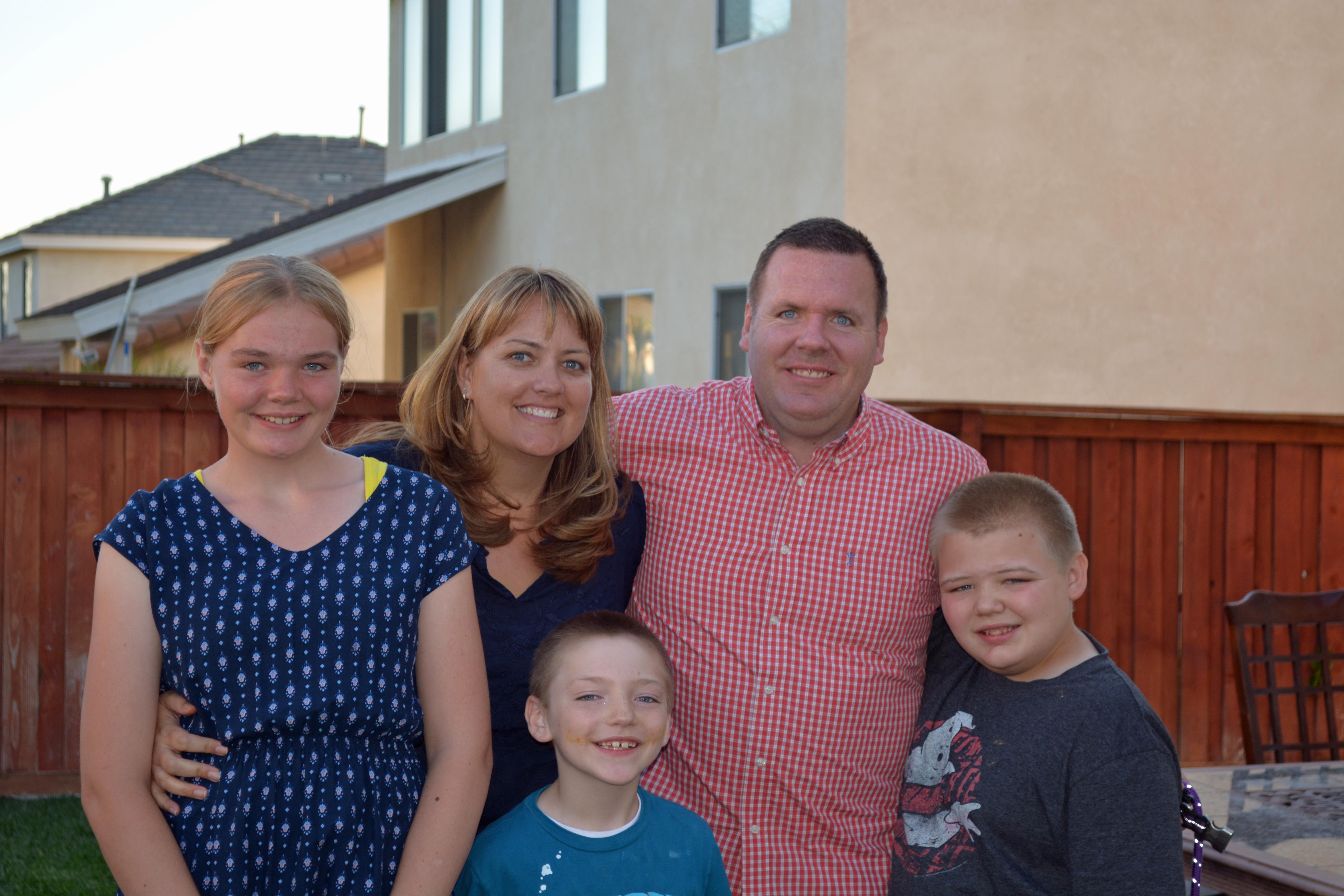
We are our version of “picture perfect.”

Second Annual “Blogging for TSC Awareness Month” Day 5

by guest blogger Shannon Grandia  (Riverside, California)

My name is Shannon Grandia and my three children and husband have all been diagnosed with Tuberous Sclerosis Complex.  Rob and I were high school sweethearts with this “picture perfect” ideal of how our life would turn out.  Rob, my husband, had no idea he had the disorder until our first two born began having seizures and were diagnosed with TSC. When Rylee was born she was this perfect, beautiful baby girl and the picture Rob and I had painted for our life seemed to be coming true.   Over her first year of life Rylee was having these abnormal staring spells that her pediatrician was writing off as normal infant behavior.  At 18 months Rylee’s staring spells were lasting minutes instead of seconds and she was now salivating.  This is when her seizures spiraled out of control and she was hospitalized and diagnosed with Tuberous Sclerosis Complex.  At the time we had never heard of the disorder and had no idea what to expect. She had numerous calcifications covering her brain along with one distinct growth, ash leaf spots on her skin and focal seizures. Doctors told us best case scenario is that she did not develop any more growths and she could live a normal life on medication to control her seizures; worst case scenario could ultimately lead to death. Our “picture perfect life” was beginning to unravel.  Because at the time neither Rob nor I exhibited any signs of the disorder we were told that is was a “sporadic mutation” and unlikely any other children we had would have the disorder.  I was about six weeks pregnant at the time of Rylee’s diagnosis, but ultimately lost the baby at 12 weeks.  This put a strong desire in Rob and I to have another child and since we were told it was not genetic, we felt confident that there would be no complications with another child.

Jake was born two and a half years later. At birth he was a happy, thriving baby boy. Doctors told us it was unlikely he would have TSC, but they would monitor him when we brought Rylee in for her appointments.  At a few months old we noticed a couple white spots on his skin, but doctors told us it was a coincidence and he wasn’t showing any other signs of TSC. I am not sure how long we ignored the small staring spells Jake was having, writing them off as normal infant behavior once again but at 11 months old Jake was having a seizure every half hour and had to be admitted to the hospital and was soon diagnosed with Tuberous Sclerosis Complex as well.  He too had the ash leaf spots, three distinct growths in his brain and was having focal and complex partial seizures.  This was devastating news and our “picture perfect” life was crashing in around us.

Two children with TSC was a sign that either Rob or I had the disorder. After genetic testing it was determined that Rob had the TSC1 gene that was passed onto the children, his dad and brother were also tested and found to have the disorder. We did a lot of research and discovered there was a 50% chance of passing the disorder onto a child. A year went by and life was manageable.  Both Rylee and Jake were hitting their developmental milestones, medication was controlling the seizures and it seemed both had a more mild case of TSC. We felt confident that if we had a third child, he or she would be TSC free. We also wanted our kids to know that we loved them so much and we did not want to let TSC guide the decisions for our life.  Looking back this may have been a naïve perspective, yet it gave us Luke, and we would not change that for the world.

We did an amniocentesis with Luke to determine if he had TSC before he was born. Words cannot express the feelings that ran through me when we got the call that our unborn child also had TSC. Because of the diagnosis we did further testing and also knew he had tubers in his heart before he was born.  Luke came into the world three weeks ahead of schedule and spent the first two weeks of life in the NICU monitoring SVT’s of his heart. Luke spent more days in the hospital than out his first year of life. At one point he was having over 80 seizures a day and was close to comatose. He also had chronic pneumonia, RSV twice, asthma and further heart issues. Then at two and a half he was hospitalized for liver and kidney failure along with Pneumonia and the H1N1. This was the closest we came to losing Luke and he spent almost three weeks in the PICU at Loma Linda. This hospitalization also revealed that Luke was aspirating with fluids and he got a GI tube for fluids only.  Was this really my life?

Luke’s complications were some of the most difficult and darkest days. With the focus on Luke, Jake’s behavior began to decline dramatically.  At three years old he was no longer hitting developmental milestones, and was actually beginning to decline.  Behaviorally, Jake was throwing constant tantrums and was extremely aggressive being asked to leave the private preschool we had him in at the time.  Rylee was also having a difficult time during this period.  She was struggling academically, had weight gain from seizure medications and ADHD.  All three of our babies were fighting and I will be forever amazed how their strength brought them and us through those rough days. This was a long ways away from the “picture perfect” life Rob and I had dreamed about.

We have now lived with Tuberous Sclerosis Complex for over 11 years.  Rylee is 13 years old and thriving. She is the least affected and is on the road to leading a long “normal” life.  Rylee still takes medication for seizures and ADHD, and school is not easy.  But Rylee is learning how to be a good student and stay focused.  She is also a good athlete, playing softball for the last 4 1/2 years and now playing club volleyball.  Mostly, Rylee is known for her bright smile, positive attitude, and love of life.  She is an incredible help with her brothers and has a heart of compassion that teaches us daily how to be a better person.  Jake is now 10 years old and has a diagnosis of intellectual delay and autism.  He too still battles seizures, but they are controlled the majority of the time by medication.  He also takes a concoction of medication for behavior.  Jake has recently moved to a severe autism class, in the hopes that we can get better control of his behavior.  The key with Jake is consistency and routine, which is actually good for us all.  He as an ABA, one-on-one aid with him in class and an outside agency now evaluates and helps with intervention weekly. It has been a rough couple years.  Luke is a 1st grader (in a more severe Special Day Class).  He is the healthiest he has been since birth.  We have never been able to get his seizures controlled, but at an average of five a day, he is on the most effective combination of medication so far and has begun the Modified Atkins Diet.  Also, the G-tube and not drinking fluids has kept the Pneumonia away and he has had a nice stretch of staying out of the hospital.  Because of his medical issues, Luke has an LVN that stays with him throughout the day.  Originally, we were told he may never walk, talk, or even live past the first few years of life.  Not only has he defied all the odds, but cognitively is trying to catch up and shocking everyone.  At 7 years old, Luke is saying more words everyday, can now ride a tricycle, can follow routine rules in the classroom and on the playground and makes anyone who comes in contact with him immediately fall in love with those bright, blue eyes and huge grin.

Rob and I take one day at a time and have no idea what the future holds for our children, but it makes for an interesting journey.  We have learned to celebrate the little things in life, trust God has a plan for us and our three children, lean on each other and those around us when we need strength, and see the daily blessings our children give us.  TSC is a horrible disorder, but it does not define who we are. Rob and Rylee are both considered mild, Jake is moderate and Luke is classified as severe.  We pray daily for a cure and that the seizures and complications will miraculously disappear.  But we also are so thankful for our three miracles, the difference they are making in this world and the joy they bring.  You will not meet three happier kids that appreciate life and each other more.  Watching them together is a beautiful thing and they teach us daily how to be better.  Over the years our idea of “picture perfect” has changed and our we are our version of “Picture Perfect.”
DSC_0098


Normal is Boring

Second Annual “Blogging for TSC Awareness Month” Day 4

by guest blogger Kate Green  (Melbourne, Australia)

image-2Last Sunday morning I woke up with my son Hamish, Spike the cat and a broom in my bed. This was not entirely unusual. Welcome to my world.

Hamish is eight and has Tuberous Sclerosis, which was diagnosed when he was two days old. He has global developmental delays and very little formal language so far. He also has the face of an angel, an array of very effective communication and charm techniques and is endlessly funny. Whilst Hamish is not technically autistic as such, he has a few mannerisms which are termed “autistic tendencies”. These include the lack of speech, lots of happy flapping and and a tendency to wander off if given half a chance. Fortunately he is never presented with that chance. These tendencies are counterbalanced by the fact that he loves attention, will shamelessly charm anyone who grabs his interest and his love of socialising. Life with him can be challenging at times and not always predictable, but I’ve found that maintaining an open mind and trying to see the humour in situations is essential. His schooling is a great example.

Hamish is in his third year at a lovely specialist school here in Melbourne. During the term, the school bus arrives to collect him at 8.35 each morning. Hamish loves catching the bus and is loudly greeted by the other kids when he hops on. On his birthday recently, the whole bus sang Happy Birthday to him before they set off. This certainly got the attention and a few smiles from people walking past our house.

At school Hamish is in a class of five children, with a special needs teacher and two assistant teachers. His curriculum consists of art, music, drama, dancing, literacy, numeracy and swimming. In Hamish’s class, it also includes Swahili as a second language. Peter the assistant teacher is from Kenya image-4and is teaching Swahili words to Hamish and his classmates. I’m not sure how much Swahili is sinking in with Hamish, but given that his other teacher is from the USA, I’m half expecting him to start speaking Swahili with an American accent.

It’s a wonderful school and the care and dedication shown by the staff is amazing. Hamish is thriving in this environment. His sense of humour and love of silliness is encouraged, even if it involves him throwing all of the class teddy bears out the window or getting soaked in water during sensory play. When I arrive to collect him in the afternoon he is always happy and draws out the leaving process as long as possible. This routine includes giving each of his teachers a good bye pat on the face and trying to sneak out the door with whichever toy he happens to be playing with. By the time I’ve chatted to his teachers, extracted Hamish and said hello to the other parents it is often a case of the long good bye.

At home Hamish loves to potter in the garden, sort through his toys, play on the iPad and snuggle. The obedience he shows to his teachers usually magically disappears at home, where it is replaced by what I call selective deafness. Which is not to say he is naughty. He’s a very chilled little boy, but has plenty of attitude and is very good at getting his own way. He’s also a master of passive resistance. When bedtime rolls around he won’t kick and scream if he’s not tired. Instead he will walk with me to bed, but gradually sink to his knees, then onto his hands and knees, then finally onto his tummy in the manner of a reluctant snake. He thinks this is hilarious. Once he’s finally slithered into bed he usually goes to sleep pretty quickly. The nights when he decides he doesn’t want to sleep can be interesting. He will either very calmly come out of the bedroom again and again to show me that he’s still awake, or he’ll quietly and efficiently pull everything out of the cupboard and scatter it across the room. I personally prefer the first option.

Like many developmentally delayed children, Hamish goes through phases of being fixated on a particular toy or domestic item. The egg whisk is a perennial favourite and the dish brush frequently goes missing. Computers are also especially interesting. He has an iPad, but is fascinated by anything with a keyboard, a mouse and a monitor, especially if they belong to his big brother.

image-3Fortunately, Hamish is extremely healthy and has none of the dietary problems which can afflict children with Tuberous Sclerosis. He loves food and will try almost anything. His tastes actually run to the quite exotic. He prefers camembert and quince paste on water crackers over regular biscuits and loves anything spicy. Chocolate and ice cream are his first loves though, so in that respect he’s much like all little boys.

Which brings me back to waking up with Hamish, a broom and a cat. The broom is his latest fixation. He drags it across the floor, swings it around and takes it with him to his thinking spot on top of the step ladder, where he sings to it. He loves it so much at the moment that he brought it into bed for a cuddle. Along with his his opportunistic cat Spike.

Which pretty much sums up life with a child such as Hamish. Its nothing if not interesting. Sometimes frustrating and on rare occasions sad, but overall funny and happy, in a slightly demented sort of way.

image-5

It isn’t going to be easy, but nothing worth doing ever is.

Second Annual “Blogging for TSC Awareness Month” Day 3

by guest blogger Michele Stiefel  (Lancaster, Pennsylvania)

adam 5In March of 1985, our second son was born.  Adam was the baby I could relax with, knowing a bit more the second time around.  But by May, Adam was hospitalized with his first seizures and flown from our local hospital to Children’s Hospital of Philadelphia where he was diagnosed with tuberous sclerosis.  No one in our family had ever heard of this disease.  No one had ever had seizures.  Our world felt like it had blown to pieces.  His four-year-old brother, Ben, felt like he had caused the baby’s illness because he had been so jealous.  Ben began to act out and we sought out counseling to help him and us.  Slowly over that summer, we started to try to find some kind of normal – going to the local mall, taking Ben to his swim lessons and so on.  We waited anxiously for Adam’s early intervention program to have his spot available in the fall, but before we could start – Adam was back in Children’s Hospital with infantile spasms.  The next three years were nothing short of awful as there weren’t the kinds of meds back then that are around now.  We never really got control of the infantile spasms and he went from a smiling baby at 4 months to a lump that didn’t cry, didn’t coo, and didn’t roll over…just laid where ever he was placed and kept on having seizures.  That was our beginning…

Fast forward two years and Adam is five.  The infantile spasms are fading out although his “Heinz 57” varieties of seizures are still around.  But he’s no longer in the fog of IS:  he smiles, has a beautiful face and people fall in love with him easily. He’s learned to sit and crawl. He’s standing but hasn’t taken that first independent step yet.  My husband and I hire his early intervention teacher to do respite with the boys overnight so we can celebrate our 10th wedding anniversary at a nice hotel.  When we get home the next morning, Adam greets us by walking independently around the corner!  Stinker took his first steps while we were away!  It was the best present we ever received.

Early intervention those first five years helped Adam and our whole family to survive.  We learned to hope and dream of a future, not just of limitations but of having him experience as much of a normal life as his older brother with the same opportunities and experiences – adapted Adam-style.   It wasn’t going to be easy but nothing worth doing ever is.

The first big “normal like Ben” goal for Adam was to attend weekend religious school at our synagogue.  There were no other children with special needs in adambmitzvahthe building and our rabbi wasn’t so good at “getting Adam.”   Luckily I’d met another Jewish mom in town whose son was a couple of years older, also non-verbal, who used a wheelchair.  I talked her into joining and we started our own class with our boys.  About the same time I volunteered to serve on the synagogue board of directors because the best way to make things happen is to become a decision-maker with a voice and a vote.  Then the rabbi who didn’t get our kids took another job in another city and the search committee started looking for a new rabbi who would be willing to do Bar Mitzvahs for kids with special needs.  We got a great one.  Our boys started studying extra with the rabbi, listening to Bible stories, handling ritual objects, and being recognized in front of the entire religious school just like the rest of them.

At 13, Adam had his Bar Mitzvah and it was wonderful!  He loved Jewish music, so we hired a Jewish folk singer who wove music throughout the service.  Adam is non-verbal so he couldn’t lead the service like a regular Bar Mitzvah boy would.  Instead he worked for two years to be able to hold a special wine cup upright throughout an entire blessing without putting it down or spilling it.  He learned to hold and “hug” the Torah scroll on his lap without letting go.  Being non-verbal he couldn’t read from the Torah in Hebrew so his brother read for him.  This was special – no one is allowed to touch the Torah scroll where the Hebrew is written.  One uses a special pointer to follow along.  Big brother Ben held the pointer and Adam’s hand at the same time as he read so that Adam could “read with him.”  To keep Adam from fidgeting, Ben used one finger to tickle Adam’s palm because it calms him — all while they were doing the Torah reading.  The sanctuary was full and there weren’t too many dry eyes in the house.  We followed it up with a great party and Adam definitely knew he was the guest of honor!

Adam went to a special needs summer day camp from the age of 8 to 21 and had lots of fun.  Swimming wasn’t his thing but music time was.  He participated in programs as a teen where he got to hang out with another teen or college student and do regular teen things.  He went to four proms and had a date for each one of them!  He discovered blondes… :)…he really likes blondes.

The summer after aging out of school at 21 was scary.  A rare malignancy was discovered in his colon.  Surgery to remove half of his colon and three weeks in the hospital with complications followed.  He was down to 85 pounds and took a good two months to recover.  Then it was time to begin his journey into the world of adult services.  We did not want Adam to be inside four walls all day in a sheltered workshop environment.  So he became one of the first participants in a new pilot program taking individuals with severe adam promdisabilities out into the community as volunteers.  He helped with Meals on Wheels – his staff would drive the car and knock on the door; Adam would hand the lunch to the senior citizen.  He made lots of elderly friends on the route.  He worked in local libraries, pushing the books onto the shelves (with hand-over-hand support by staff).  He was a busy young man and enjoyed being out and about in the community.

Through one of the programs, Adam met Matt who is also non-verbal and has autism.  Just picture two non-verbal guys making eye contact with each other and laughing and insisting on sitting together every day at lunch.  The program staff told me about how great they were together and said, “They should live together.”   I sent our contact info home in Matt’s backpack and his mom called me.  We started to get the guys together on Saturdays for pizza and we began to talk about the possibility of them living together.   News traveled through the system about these two guys and how great they were.  The head of the county intellectual disability department called us, said he’d heard about these two and were we ready for Adam to move into his own place with Matt?   Adam was 24 and we said yes because one of our dreams was that Adam would live with a friend, not just in a place where there happened to be an opening, but with someone he truly liked.  He’s lived there since 2009 and he loves it.  He’s thrived there, gaining in independence and doing things there that he’d never do for me at home!  He’s in a community he knows well, having grown up there.  We are able to keep an eye on things and be involved while we are still healthy and able because we’re in our 60’s and none of us live forever.   As parents our job is to give our kids “roots and wings”.  Big brother, Ben, went to college, started a career, got married, and bought a house.  Adam has his jobs, social life, and lives in a house set up just for him and Matt.

I mentioned that Ben got married.  Guess who was his Best Man?  Adam beamed with joy throughout the entire wedding weekend.  And boy!  Were they both handsome in their tuxes!

benadam

Finally, it’s important to know that we went through really hard times with his tuberous sclerosis, just like a lot of you.  Recently he was diagnosed with Crohn’s disease, totally unrelated to his TS, so he gets two chronic illnesses to deal with and it feels really unfair.  There have been times over the years when I fantasized about throwing my suitcase in the car and heading west and never looking back, but I never did.  Instead we used counselors, behavior therapists, doctors, teachers, compassionate friends and family to help us get through the worst.  Now after 29 years, I see what our family has accomplished and I know we more than survived, we thrived.  We are all better people because of having Adam, TS and all, in our lives.  So keep dreaming of possibilities for your kids – you never know what you can achieve!


I want new TSC parents to know that there is hope.

DSC_0080

Second Annual “Blogging for TSC Awareness Month” Day 2

by guest blogger Brittany Schwaigert  (Memphis, Tennessee)

Our story begins in the spring of 2008. My husband and I had just welcomed our very first child into the world. Greyson was born a beautiful and healthy 7 lb., 10 oz. baby boy and there were no indicators at all that anything was amiss with his health other than a slight touch of jaundice. He was, and still is, such a beautiful child. We were so thankful that he was healthy. We never took it for granted.

Then at two months of age, Greyson had his first round of vaccinations and subsequently developed what looked like sun spots on the tops of his thighs. The vaccinations had been administered in his thighs, though, and I was aware that the appearance of the spots might well be purely coincidental. I was far from panicked, but looking back on it, I do remember that point as being the first time I had misgivings concerning Greyson’s well-being.

Things took a turn when, at approximately three months of age, Greyson started to develop a strange habit. His habit looked to me like the Moro reflex – a phenomenon that occurs when some babies are placed on their backs and respond by throwing their hands out in the air. But in Greyson’s case, this behavior kept happening at strange times, and in clusters. Close family members who witnessed the behavior or were told about it tried to tell me and my husband that it must simply be an immature nervous system, or said that “babies do all kinds of weird things.”  My gut instinct, however, told me that something just wasn’t right.

Then one afternoon, Greyson was lying with me in the bed and I was watching him sleep. All of a sudden it hit me: what if this behavior was a seizure? I practically ran to the computer to find out what I could about behaviors associated with infant seizures. What I found made my stomach sink into the ground. It hit me like a Mack truck that what I was seeing in Greyson was the outward manifestation of a dangerous and aggressive type of seizure called Infantile Spasms. It felt like my world was crashing around me in one split second.

I have always felt that it was the hand of God in my life preparing me for what was to come that, before giving birth to Greyson, I had worked for a pediatric neurologist managing an event facility that he owned. I called him immediately on his cell phone and left him a message. What followed in the next few weeks would be a complete blur.

Greyson was examined by the doctor in his office, but there was nothing that he felt he could definitively diagnose without an MRI. We scheduled the MRI and when the day came, I can say without hesitation that putting a three-month-old infant into an MRI machine was one of the scariest moments of my life. I sat in that MRI room with my baby, freezing to death, trying not crumple into a heap on the floor.

After the results came back from the MRI, the doctor called me at home. He said that he saw “indications of Tuberous Sclerosis.” The doctor explained thatdownload (2) Tuberous Sclerosis (TS) can cause epilepsy, learning disabilities and sometimes even blindness if victims develop the tuberous growths caused by the disease in their eyes (incidentally, this is the reason I feel it is so important to go directly to a TS specialist when anyone is diagnosed with TS. Though I’m thankful we got a diagnosis when we did, due to the relative rarity of TS, I was given barely a shred of information about the disease that would come to change the entire scope of our lives. The only thing I knew about TS was that my husband’s step-mother’s sister had it and she had been institutionalized for years). I looked at my precious baby lying there and suddenly was filled with fear for his future.

After a myriad of other diagnostic testing, including blood work, a lung x-ray, an echocardiogram, a kidney ultrasound, and several EEGs, the neurologist we had been referred to and his group came to the conclusion that Greyson’s condition was, indeed, TS. On top of that, Greyson was also diagnosed with Polycystic Kidney Disease (PKD). Because of the proximity of the genes responsible for both TS and PKD, in many cases of genetic mutation associated with TS, both of the genes deleted at the same time. They did in Greyson’s case, and our lives have not been the same since.

We continued going to this same neurologist for months, even after he said ridiculous things like “I can tell when someone has TS just by looking at them,” or “don’t Google this disease,” or “I guess we can try Vigabatrin (the first line of defense against infantile spasms, which was only available through international mail order pharmacies at the time) but you will have to get it on your own from Canada,” or my favorite (from his associate): “Are you asking me if every spasm is like a bullet to the brain? No, I don’t think so.” Meanwhile, my child was suffering intensely. He was crying every time he had a cluster of seizures and it was heartbreaking to watch. It gives me physical pain to think of it now.

At one point at around six months of age, when my child was incredibly doped up on Phenobarbital and ACTH for his seizures, and bloated to an unrecognizable state, I broke (I am not even going to mention the horror of sticking my child with a needle twice a day). I just couldn’t take the stress anymore and I demanded that he be admitted for a 48 hour EEG. During that hospitalization, Greyson had his life saved the first time. His blood pressure was so high from the ACTH and his PKD that he had to have emergency blood pressure meds put in through an IV. He could have had a stroke at any moment.

IMG00118After that hospital stay, receiving no answers as to how we were going to stop Greyson’s seizures, I made up my mind that TS was not going to get the best of us, or him. I immediately researched the nearest TS clinic. At that time, in 2008, the closest clinics were in St. Louis and Nashville (we are in Memphis). My in-laws live in St. Louis, so that was the obvious choice. I begged the clinic appointment coordinator to get us in as soon as she could. When we met Dr. Wong, the head of the TS clinic in St. Louis, he put Greyson on Vigabatrin/Sabril immediately. For one entire year afterwards, we had seizure control with a  combination dosage of Vigabatrin/Sabril and Topamax. After going through a huge amount of different medicine combinations, we had finally found one that worked. For that year, everything seemed like it might get better.

Then, out of the blue one day in 2010 at a therapy session, the seizures started again. They didn’t stop for two years. The seizures were intense and very frequent. Sometimes, Greyson momentarily stopped breathing and often fell and hit his head. Through all this time, Grey was getting farther and farther behind his developmental milestones. He didn’t crawl until 13 months, he didn’t walk until 21 months, and he didn’t talk until he was five. At this point, I feel I can’t stress enough how important it is to get your child into Early Intervention when he or she has TS. We scoffed at the idea at first because Grey wasn’t behind until he was close to a year old. But, looking back now I would advise any parent to go ahead and start it as soon as possible, since the TS diagnosis alone is enough for your child to automatically qualify for this free service.

In any case, after failing with ACTH, Phenobarbitol, Keppra, Sabril, and Topamax, Dr. Wong was ready to pronounce Greyson’s epilepsy intractable. So, we started to think about a surgery evaluation. Around this time, I noticed that the TS Alliance had designated LeBonheur in Memphis as a TS Clinic. I was thrilled to hear this! My husband made contact with them regarding the Tennessee Step Forward to Cure TS walkathon that I have chaired for the past few years and they offered to see Greyson and give us a second opinion.

This was the beginning of something amazing. Dr. Wheless, the head of the TS clinic in Memphis, and his staff at the Memphis clinic are miracle workers. I cannot say enough wonderful things about how much this man cares for his patients. One of the best things that a doctor can be is proactive and open to listening to patients and their parents. Dr. Wheless started us on the first of several medicine changes to see what would work. We went through combinations of Clobozam, Zonegran, Topamax, Depakote, and Onfi to no avail. He did more MRIs, multiple EEGs, an MEG, and a full surgical evaluation. That unfortunately told us that Grey was not a candidate for surgery, since a cluster of tubers were located in a dangerous area of the brain over the ear, where removing them could possibly do more cognitive damage than good. But Dr. Wheless stayed vigilant.

As a last resort of sorts, when Greyson was four Dr. Wheless suggested that we try Sabril again. By this time, Greyson was having several seizure typesdownload (3) including complex partials and tonics, along with myoclonics, which were the worst offenders in his case. Dr. Wheless said that there was some research indicating that Sabril was working well for complex partial seizures once a patient gets to be a little older. But, TS had something in else in store for us.

The same week that Grey started taking Sabril again, he started to act like he was getting sick. We couldn’t figure out what was wrong with him because there were no outward symptoms except listlessness and extreme lethargy, and some bruising on his feet. I took him to his pediatrician and, bless her heart, she said “I don’t know what is wrong with him, but I know it is SOMETHING. I want you to take him to the ER right now.” That began the worst month of our lives and marked the second time that Greyson’s life was saved.

After numerous tests and several days in the hospital, the ER doctors found that his blood work had come back with severe Leukocytopenia, which means that his body was extremely low in white blood cells. So low, in fact, that he needed a plasma transfusion. Basically, if he would have fallen and hit his head (which he did frequently with seizures and hypotonia) he could have had a brain hemorrhage and died. Dr. Wheless and his team, along with the hematologist concluded that Greyson had gone toxic on his Depakote. He was on a high dose at the time and his body had lost its ability to produce white blood cells. This was after they scared us to death with the possibility of his having leukemia and talk of his potential transfer to St. Jude down the street. We had no choice but to stop Grey’s Depakote dosages cold turkey. Those of you who are epilepsy parents will understand that there is a reason that you wean off AEDs – you never quit cold turkey.

Once we got Greyson stable after the transfusion and his white blood cell count started to improve, we were able to check him out of the hospital after a week-long stay. Mysteriously, he didn’t seize one time during our stay. This was the first time in two years that he had been seizure-free that long. But the horror was really only just starting. As soon as they stopped the Depakote, Greyson began smiling and laughing again after what seemed like an eternity of being doped up and zoned out from all the medicines. Before we checked out, though, I noticed that he was hyper and not wanting to sleep.

250804_3839084948335_1350123231_n-1He didn’t sleep for five days. Greyson had an experience akin to a drug addict  going through withdrawal from heroin. He would scream and cry and want to be picked up and then want to be put down and he would try to climb you like a tree. He ate NOTHING for five solid days, he barely drank anything, and he lost so much weight. It was the absolute most difficult thing that I have ever been through, and it wasn’t even me who was going through it. It was like an alien had taken over my child. His body was literally vibrating. I have never been so scared in my life. No one could tell us what to expect or how long this detoxing process would take, so there was no light at the end of the tunnel. It is difficult to express how horrible this two-week period was on our entire family.

On the fifth or sixth day of this hell week, he finally had a popsicle. We all breathed a little sigh of relief that maybe things were getting better. And slowly, he started to want more popsicles and more drinks, acting more and more like himself. We went through three different drugs that week to get him to relax, including Valium, Klonopin, and Risperdone. The Risperdone was just as scary as the withdrawal symptoms, however, causing Grey to drool and seemingly hallucinate.

After almost two weeks of hell, his body adjusted to the change. We ended up putting him back on the Depakote at a non-therapeutic dose (less than half of what he was taking previously) just to help with behaviors. As soon as he got that first dose back in his system, he fell asleep. It was like the clouds opened up and we saw the light of heaven. He has not seized since.

That seizure-free period has now lasted for 21 months. Every day I think about the next time he will seize. I often have nightmares about it. It is a fear that will never leave your mind when you are a parent of an epileptic child. Any strange movement makes the hairs on the back of your neck stand up with alarm.

I am thankful, so thankful, that Greyson has had this respite from the continued seizures plaguing his mind, his growth, and his life. He has turned into a completely different child. He is a person who we feel we are meeting for the first time and we love every second of it. He still struggles with simple tasks like potty training, but the difference between Greyson at four and Greyson at six is 180 degrees. He began to talk at five years old, and he is now learning new words and phrases all the time.

What I want new TS parents to know is that there is hope. You should always follow your gut and keep pushing your doctors when you are not getting the answers you want and that you deserve. If your doctor will not be proactive and listen to you, then find another one.

I would also encourage TS parents to love your child today – not for what their future will bring, not for what they were before the seizures took over, not for what you imagined they would be – because none of us know what the future will bring. When Greyson was first diagnosed, my best friend said something to me that has stuck with me all this time. She said: “None of us are promised tomorrow. Tomorrow, my child might fall and hit her head on the stoop and be brain damaged.” And, however sinister a thought or remote a possibility that may be, in the end it’s true. We have to appreciate what we have right now, in this moment, because we really don’t know what tomorrow will bring.

She is not tuberous sclerosis. She is my beautiful daughter Estelle.

Second Annual “Blogging for TSC Awareness Month” Day 1

by guest blogger Jennifer Carpenter (Yellowstone National Park, Wyoming)

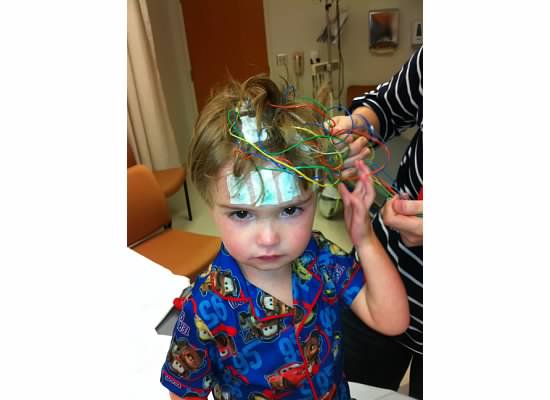
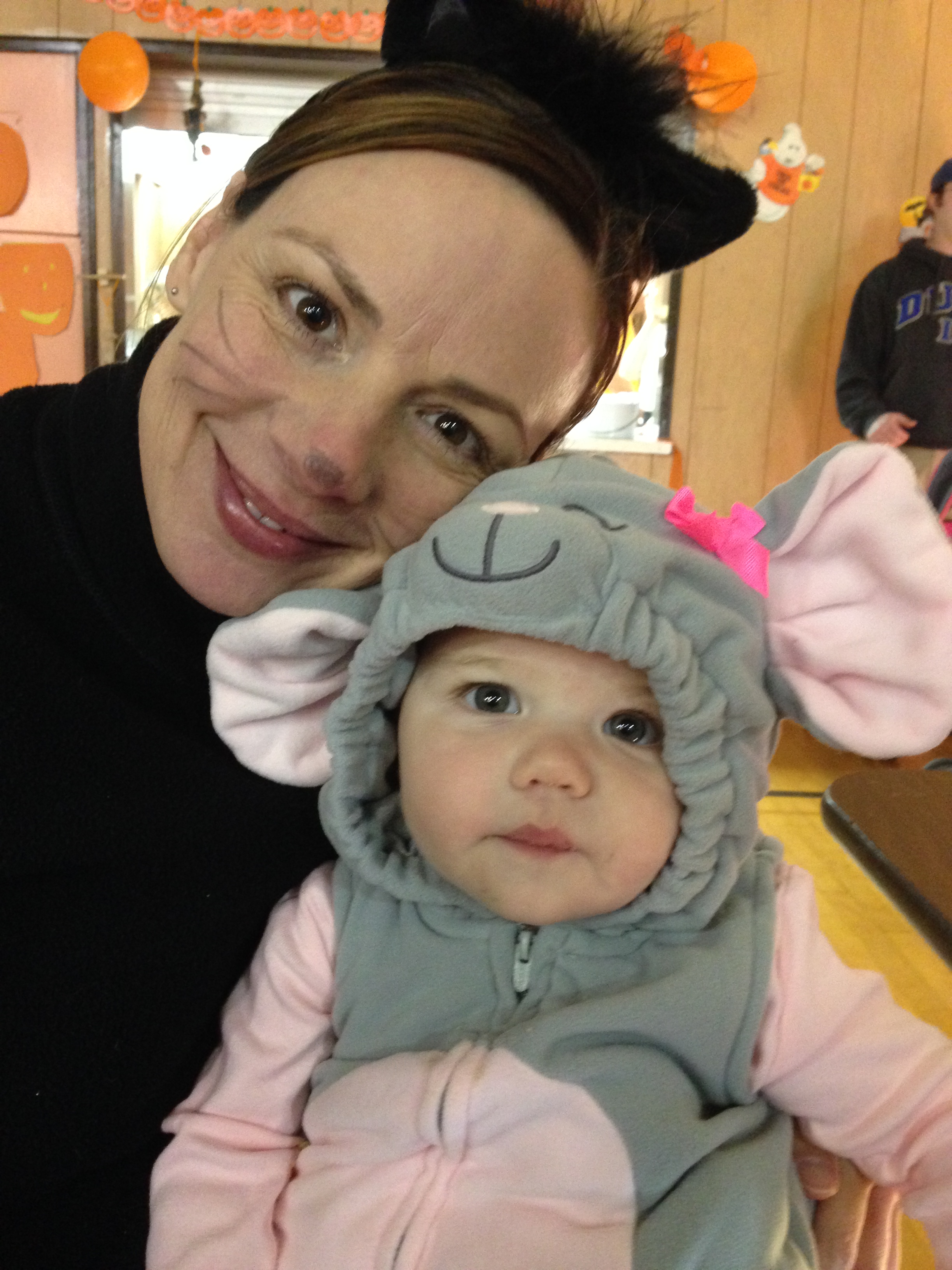
me and Estelle HalloweenI remember thinking to myself, “What are you talking about?” as I watched the radiologist point to the small white dots on the ultrasound image of my 25-week-old baby. She was saying something about cardiac rhabdo-something and her heart, and I was really just hearing words but not comprehending anything. Then, about 10 minutes later, a woman came in the room and introduced herself as a genetic counselor and handed me an information pamphlet from 1995, (and this was in 2012). I briefly glanced at it and saw the words “mental retardation” and “tumors”. I sat there dumbfounded while she told me that my unborn baby likely had a genetic disease called Tuberous Sclerosis and would have significant disabilities and may not be able to walk or talk. Again, I thought, “what are you talking about? Are you saying my baby will not be normal?”

I got into my car after the appointment and sat there in stunned silence. I picked up the pamphlet and for some reason started reading about the origins of the disease; how it was discovered and what happened to people that had tuberous sclerosis. “Fits” and “convulsions” and “retardation” were the descriptions used early on by doctors to describe these patients. Many of these poor people ended up in mental institutions. I thought, “Will my daughter have to be placed in a mental institution? How will I be able to take care of her? What will happen to her?” Then my cell phone rang. It was the genetics counselor that I had just spoken with. She told me that she was sorry and that while I could not get a late term abortion in California, that Colorado would allow medical terminations up to 27 weeks, if that was something I wanted to consider. Termination? I had been watching my daughter grow in my belly for nearly 7 months, watching her hands and feet take shape, her face and lips develop. How could I end the life of my daughter after all this time spent together? Had others terminated their babies with this diagnosis? Was that the right thing to do, if she was not going to have any quality of life and be completely mentally and physically disabled? Were the doctors certain that she had tuberous sclerosis? All of these questions were swirling around in my head as I drove the 2 hours home that day. Two weeks later, her diagnosis was confirmed through genetic testing. A spontaneous mutation had occurred during her development. This was to be our reality and I had no idea of what that would mean to my life or to hers.

In the end, I knew that I had to continue the journey with my beloved daughter growing inside of me. I became hell bent on understanding the disease and photo-178learning all that I could about what may happen to her. I threw away the 1995 pamphlet and discovered that there’s much more information and treatment options available today than there were in 1995. Our knowledge about the disease has come a long way in 20 years. (And shame on that genetic counselor that gave me such outdated information; they should be the experts on the latest information out there on genetic disorders, even the rare ones).

On the day she was born, I knew that I was going to fight for her. To be her voice and her advocate. I knew that, while I couldn’t change the fact that she has tuberous sclerosis and there is no cure, I could get her the best medical care possible and be aggressive and proactive with her treatments. I got her into a TSC clinic and I immediately enrolled her in research studies to help learn more about the disease and to help find a cure, (and selfishly, to have more doctors track her development and provide early identification of potential issues). It gave me some sense of control over an uncontrollable diagnosis and an unpredictable future. At least I could take comfort in that.

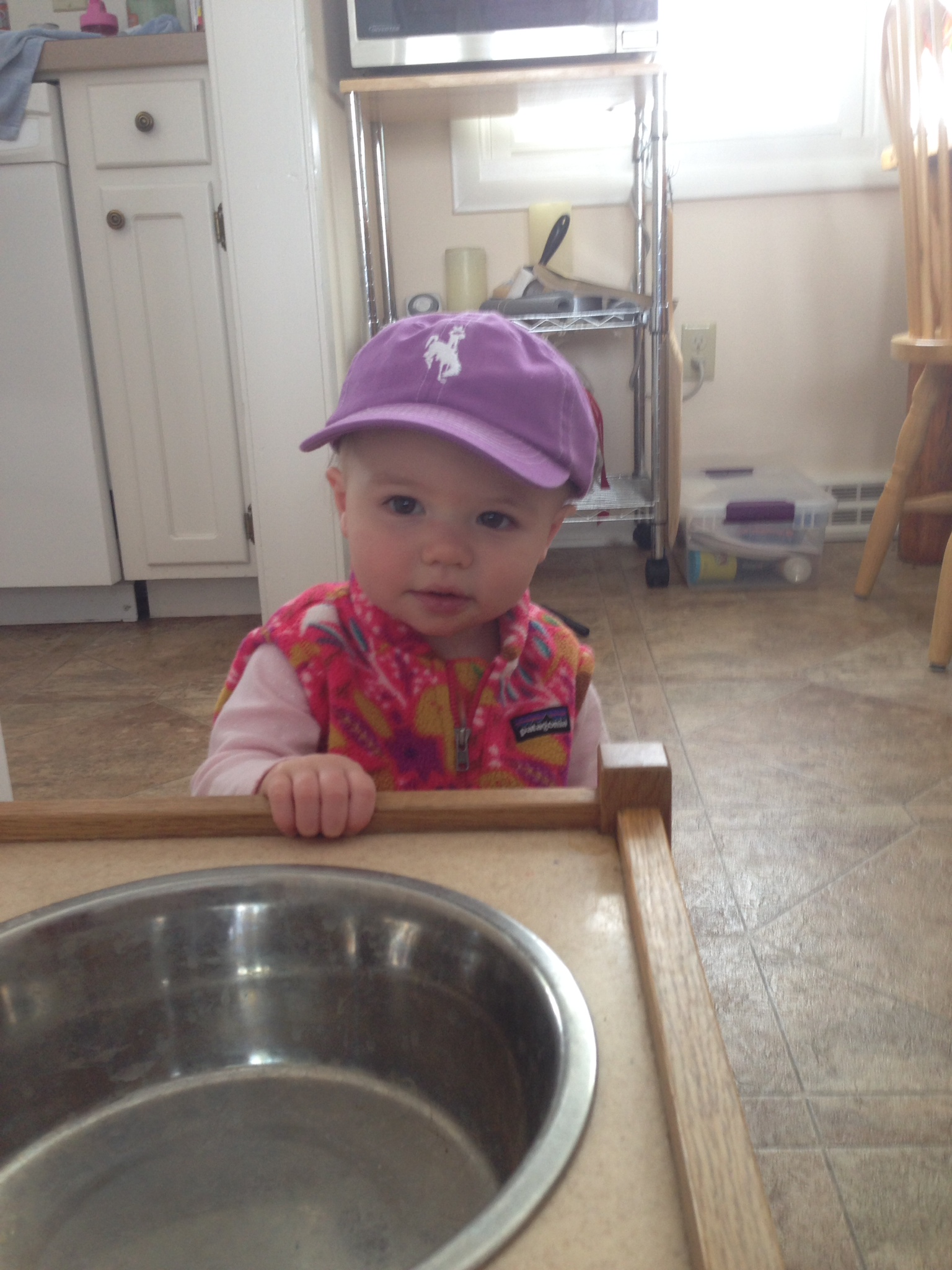
Today, my daughter is a beautiful, smiling 15 month old toddler. She isn’t yet walking or talking, but we are working on it. She may have significant developmental delays and may require special education and assistance, we just don’t know yet. She still has those cardiac rhabdomyomas, but they are not causing any issues and her eyes and kidneys are clear for now. She does have mild epilepsy, which is well controlled with medication. But these days I just try to focus on the person that she is becoming, rather than the diagnosis that she has. She is not tuberous sclerosis. She is my beautiful daughter Estelle, who laughs and hugs and smiles and just got two new teeth.

Estelle 1 year


Gearing up for TSC Awareness Month

Three therapists so far are kind of “meh” on the autism diagnosis. They recognize the “quirks” he has, but don’t particularly think of him as autistic. The diagnosis opens the door to more help, but it’s comforting to see a look of surprise from people who know him so well. It’s a tricky thing, the secondary diagnosis, when there are so many potential causes of issues. He’s social this boy. He may chew on your pants, but he’ll look you in the eye when he’s done.

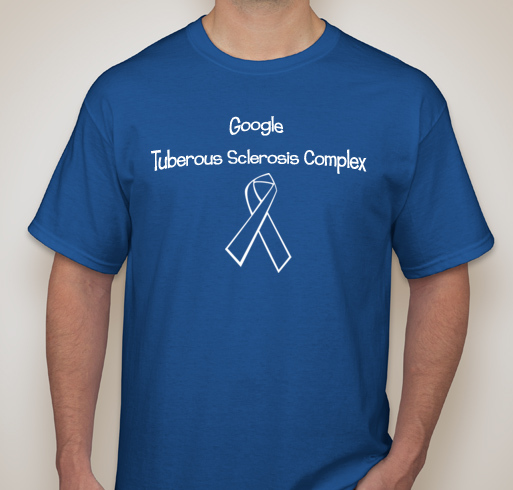
Chris and I have decided to raise money towards this year’s TSC walk by selling awareness t-shirts. We initially thought about team shirts but decided a general awareness shirt would have a bigger reach. If you don’t want a t-shirt, you can donate directly to the walk at the link at the top of the page. But if you’d like a shirt from which a portion of the proceeds benefit the TS Alliance, go here. At the moment I am posting this the shirts are unisex, but I hope to have a woman’s cut available soon.

back-big front-big

Next month is TSC Awareness Month and I plan to do a month of daily guest posts from other people living and dealing with TSC. Last year was a huge success and there is a tab at the top of the page to check out last year’s submissions.

If you would like to share your TSC story this year, I need you to e-mail me the following at pin.the.map@gmail.com:

*Your general story or you can focus on a particular issue you have had to deal with (e.g. advocating in schools, a surgery, balancing family, LAM). I don’t make rules on length. Your story is your story. I’m also open to creative entries, such as inspirational poetry. I cut and paste to the blog so a word doc or just the body of an e-mail is fine.

*city and state or country (I would really love to have more countries represented this year!)

*1-4 pictures

*if you have an awareness page, blog or fundraising page, I will share the link

Hope to hear from you!


A New Diagnosis

When I fill out medical forms that ask me for Connor’s diagnoses, I write tuberous sclerosis complex, epilepsy and developmental delay. As of Friday, I will now write autism

When Connor was first diagnosed and we read all the possibilities that could possibly come with TSC, autism terrified me the most. I really didn’t understand it. I’d worked with kids with varying degrees of autism in the classroom, some of whom I was not remotely equipped or provided the training to work with and others that were favorites of mine. But I was terrified of the word. I thought that if the day came that we received that diagnosis, I would jump out of a window.

Two years changes a lot.

I can’t say it came as a total surprise. I refer to some of Connor’s behaviors as “quirks.” I guess I was just hoping they could stay “quirks” and not become a diagnosis.

We went to Boston for his two-year visit with the TSC study. It was a low key visit since Chris and I had both caught Connor’s cold from the week before and were not particularly energetic (and why I didn’t get in touch, Ann–we’ll be back next Feb!). We also had an appointment with the Boston TSC Clinic. Even though I suspected deep down that this day was coming, I didn’t actually realize it would be Friday. The study had sent his results from the autism scale given the day before to the doctor. The words “Connor has autism” were never actually spoken. We were discussing some of his behaviors and suddenly we were talking about therapy options in addition to what he already receives. An education specialist was brought in so she could help us find local resources and I found myself saying, “So this is it? Is this an official diagnosis?” It was. But the sooner the better and we now move forward.

We also finally got a little more detail on his MRI. It wasn’t as specific as I was hoping for, but we do now know his brain has somewhere around 20-30 tubers, probably closer to 20. They are scattered throughout. I thought he had two SENs in the ventricles of the brain, but he actually has three. However, they are so small that they are nowhere near being classified as a SEGA (which can block fluid in the brain and require either surgical intervention or use of Afinitor or Rapamune) and therefore aren’t currently an issue (and hopefully never will be).

I’m sad that we only have one visit left with the Boston study. I really enjoy going up there. I think I could actually live in that city in spite of the cold and that says A LOT. I was really touched by the fact that while we were there, non-stop coverage was being given to the deaths of two firefighters and who they were. It gave the city a close knit feeling and reflected a genuine interest in the loss of two heroes. It’s not something I’ve ever seen in the 20+ years I’ve been in Atlanta, where we just get the 6 p.m. death count.

These are the only photos I took which tells you how off I was this trip.

First big boy flight with his own seat. On the way back we were told we couldn't use this seat because it wasn't airline compliant. Gotta love consistency.
First big boy flight with his own seat. On the way back we were told we couldn’t use this seat because it wasn’t airline compliant. Gotta love consistency.

photo-176

Connor loved the noisy geese.

Happy Birthday, Little Man!

Two years ago at this time I had no idea how much my life was about to change. I mean, I had some idea considering I gave birth just a few hours prior after a spectacular epidural after checking in the night before to be induced as a precaution related to findings on the ultrasound.

Right now, two years ago around noon, Connor was off being checked out. He was having the ordinary newborn exams, but he also had a cardiac exam by a specialist due the abnormalities found in his heart ten weeks earlier. They had never grown or become problematic, so by the time ten weeks went by, Chris and I thought it was some flukey thing that would require monitoring, but nothing more.

I did not know that in a few hours Connor would begin seizing, or that he wouldn’t go home for 37 more days.

I did not know we would be returning for brain surgery in four months.

I did not know he would develop infantile spasms in five months.

I did not know he would be developmentally delayed.

I did not know that as I had walked around for the first 30 weeks thinking, “lucky me! No morning sickness!” that chromosome 16 had mutated right away resulting in the later development of heart rhabodomyomas and brain tubers.

I did not know what tuberous sclerosis complex was.

What I know now is that Connor is awesome and funny, loves books and is the coolest, most adorable two-year-old on Earth.

HAPPY BIRTHDAY, MONKEY! YOU ARE KICKING TSC BUTT!

IMG_6395

Eleven Days Seizure Free!

Remember that Connor kid I used to write about before politics, politics, politics? He’s still around and doing great.

IMG_6571Connor is getting closer and closer to walking. We can now hold both hands as he takes forward steps to us. At his last physical therapy session, his therapist decided to remove the seat from his gait trainer/walker. I thought she was nuts. I thought he’d slump down with the waist support under his shoulders and refuse to cooperate, but he maintains standing and he’s moving better than ever. We had it locked so he couldn’t turn but could go back and forth in a straight line. On a whim the other day, I unlocked the ability to turn and though he careened a little out of control into furniture and the walls (guess we will paint this room last) like Lindsay Lohan behind the wheel of a Mercedes, he had a blast trying to get around.

The best news is this:

IMG_6574

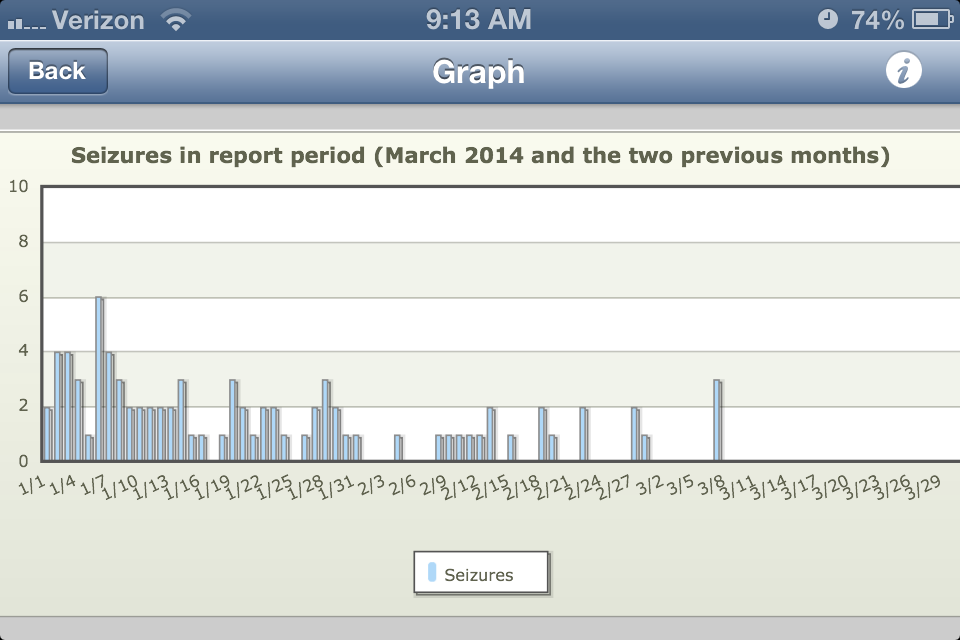
Though I started tweaking his diet back in December, we started the full-on modified Atkins diet around the second week of February. We haven’t seen a seizure since March 7. Today is the 19th.

The magic of some whipping cream and olive oil. If only dietary therapy worked for everyone. Thank God. Colorado looks gorgeous, but I do not want to take on refugee status while we wait for the rest of the country to catch up to 2014.

Hitting Capitol Hill in Washington, D.C.

So much excitement over the last couple weeks. Where to begin…

HB885 passed the House vote 171 to 4. It now awaits a hearing in the Senate. If you haven’t yet contacted your Georgia state senator, please do so right away. If you aren’t sure who it is, check here.

Chris and I flew up to Washington, D.C. last week to meet with our representatives about the continuation of funding for the Tuberous Sclerosis Complex Research Program (TSCRP) which is part of the Congressionally Directed Medical Research Program (CDMRP) in the Department of Defense (DOD). Yes, I am drowning in a sea of acronyms. Quick quiz: how many of these acronyms do you know?

AML, TSC, SEGA, LAM, SEN, CBD, CW, FDA, THC, DEA, RoC, VNS, CPS, TC, GW, IND, LGS, HIPP, KB, CHOA, PT, SLP, MT-BC, MAD

(Answers: angiomyolipoma, tuberous sclerosis complex, subependymal giant cell astrocytoma, lymphangioleiomyomatosis, subependymal nodules, cannabidiol, Charlotte’s Webb, Food and Drug Administration, Tetrahydrocannabinol, Drug Enforcement Agency, Realm of Caring, vagus nerve stimulator, complex-partial seizures, tonic-clonics, this is the name of a pharma company (I actually have no idea what GW stands for), investigational new drug, lennox-gastaut syndrome, Health Insurance Premium Payment Program, Katie Beckett, Children’s Healthcare of Atlanta, physical therapy, speech-language pathologist, music therapist-board certified, modified Atkins diet).

That fact that I know those in no way makes me smart. It just means I can do even less math than before because I’ve had to drop everything number-related dating back to second grade to make room for it all. To be honest, that only equates to a couple of years. It was all downhill from fourth. Also, don’t ask me to pronounce most of them.

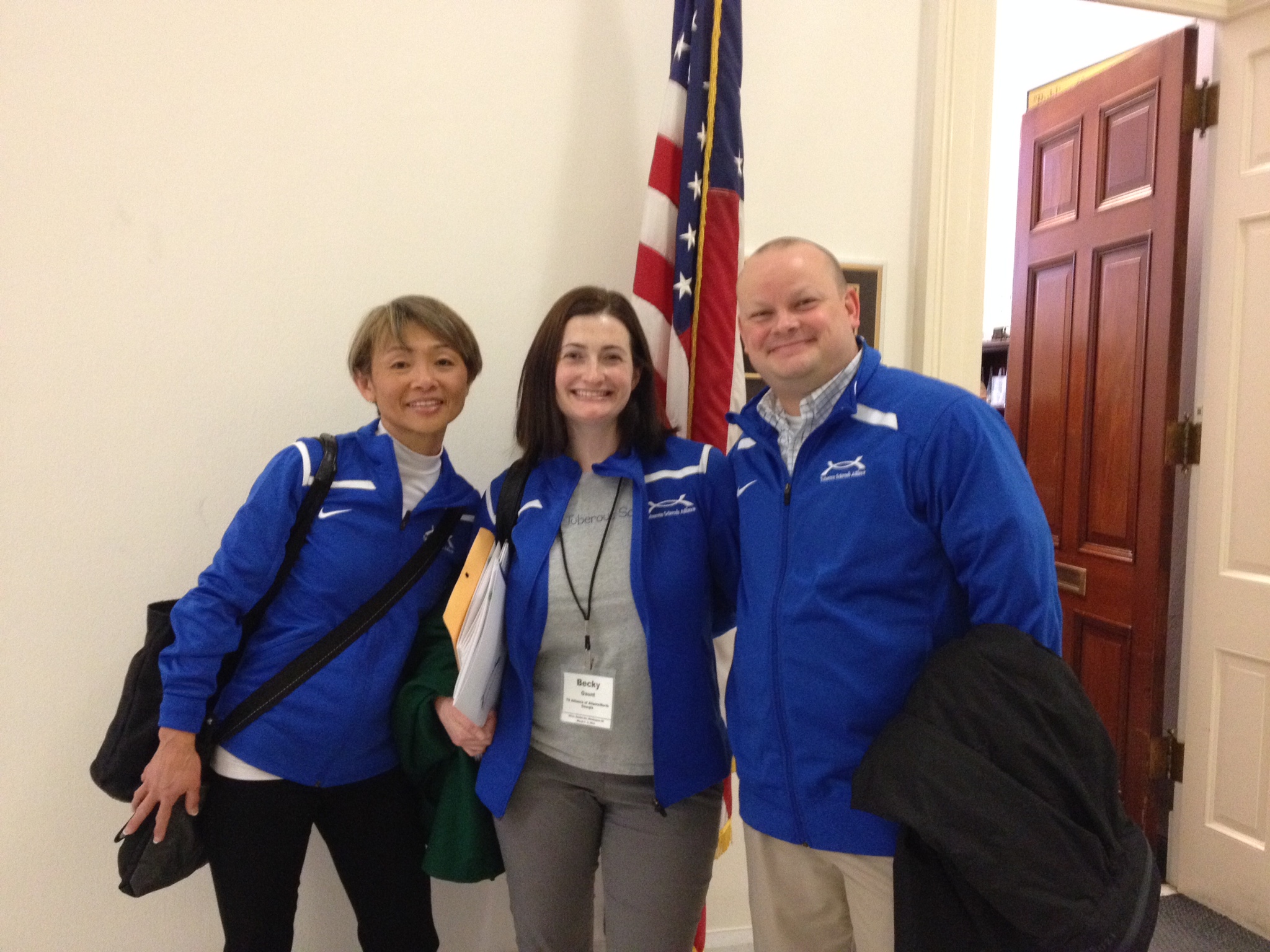
Now back to DC…(see how I did that?) Volunteers flew in from all over the country and we swarmed the Hill in our sexy blue jackets. There aren’t words for how excited I was to discover these had thumb holes. I love thumb holes.

Fellow TSC mom Reiko and my hubby Chris helped me hit all the Georgia congressional offices.

We secured promises of support from the offices of John Lewis, Hank Johnson and David Scott. The meeting with David Scott was my favorite as I had no expectation that we’d be promised support on the spot like that, and the staff member we met with immediately began asking questions about what was going on back in Georgia with HB885 when we mentioned TSC’s link to seizures. It was awesome to know they were talking up there. Don’t worry, fearless trainers from the previous evening’s dinner, Reiko got us right back on topic 🙂

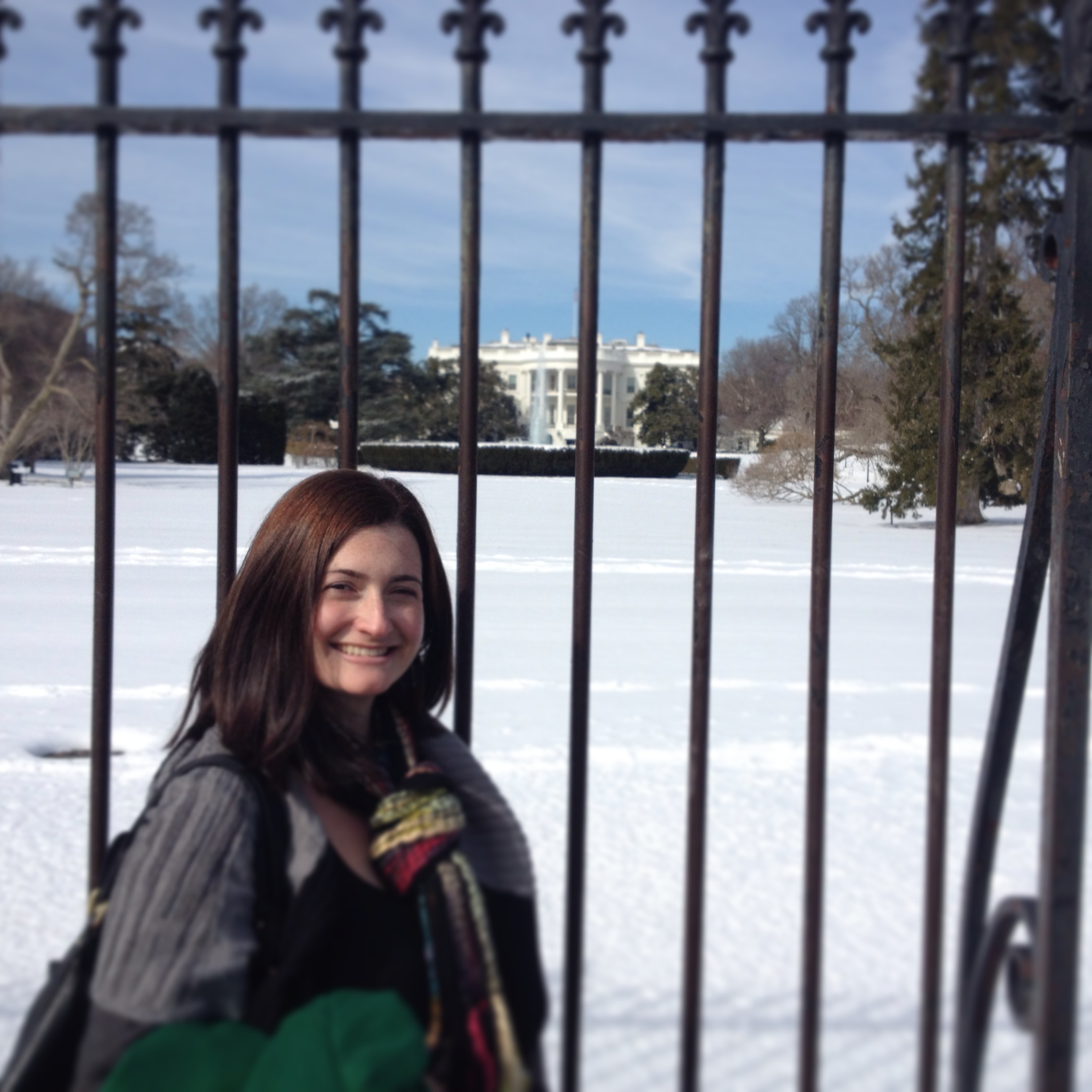
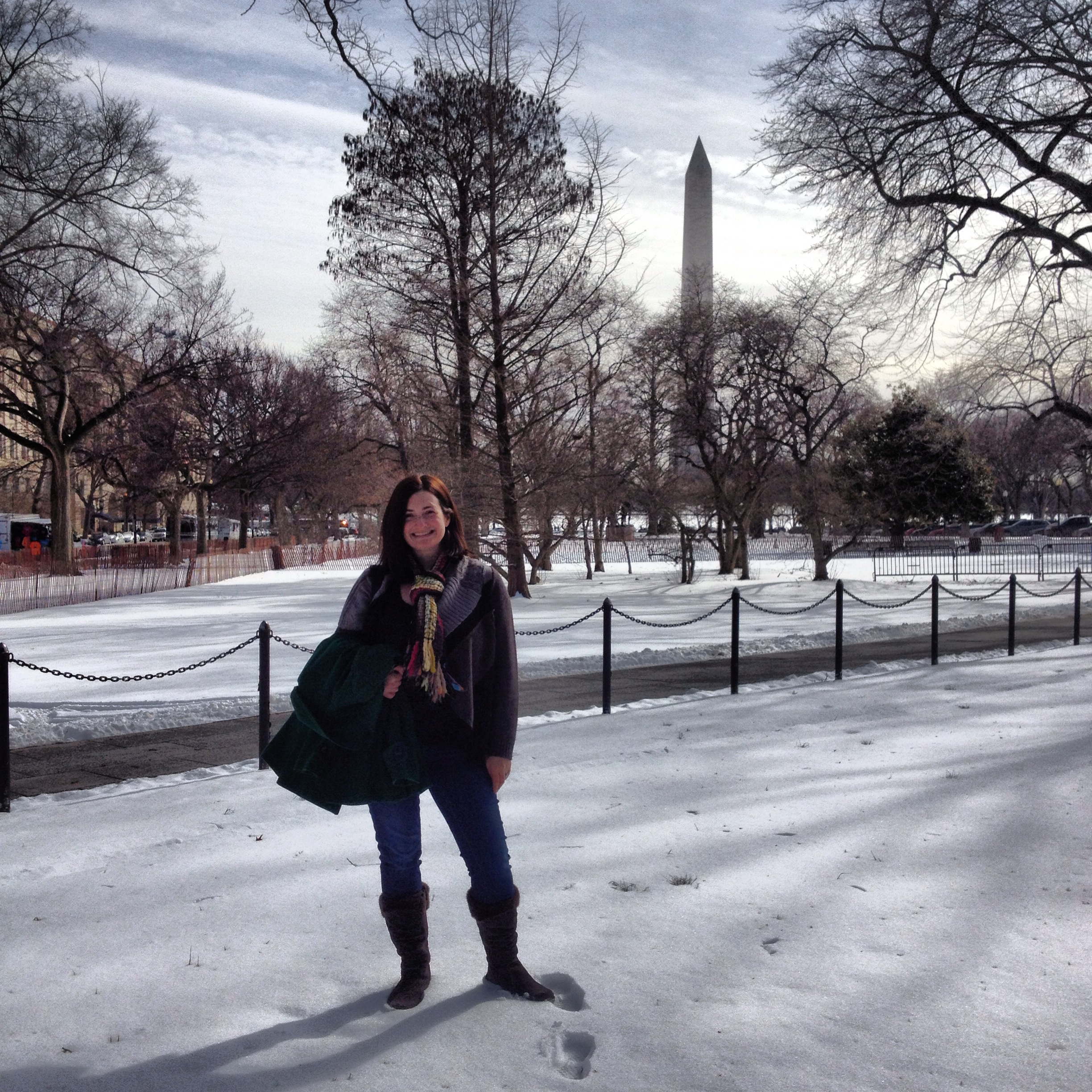
Chris and I even got some time the first day to explore so we went to Ford’s Theatre and the house where Lincoln died. His blood-stained pillow and the tiny gun that killed him are on display. The balcony is preserved as it was, and I was actually surprised to learn that it is a working theater. We did some more walking around including a photo op at the White House where our phones died simultaneously only letting us each get one shot. I don’t want one more stupid iPhone model coming out until they can make a battery that lasts more than five minutes.

IMG_6499

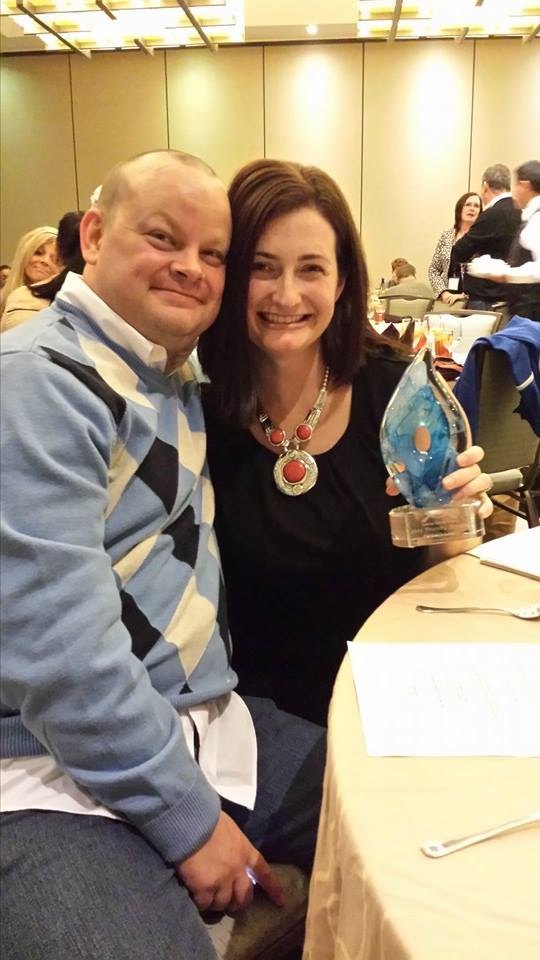
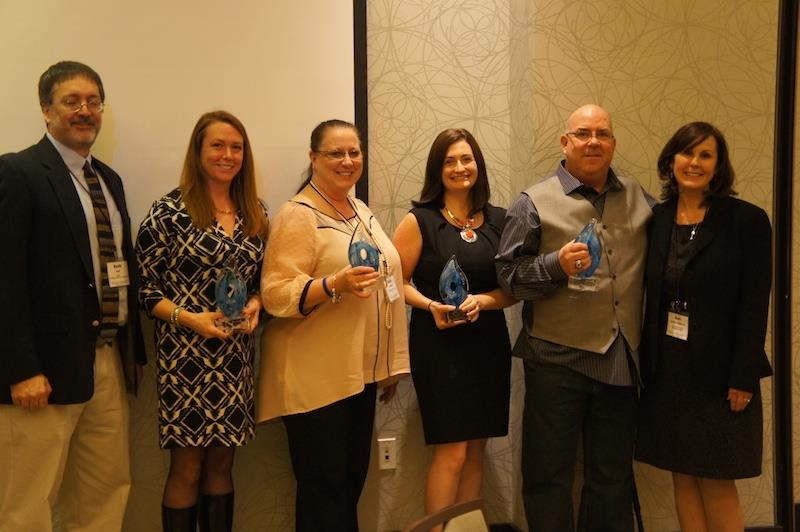
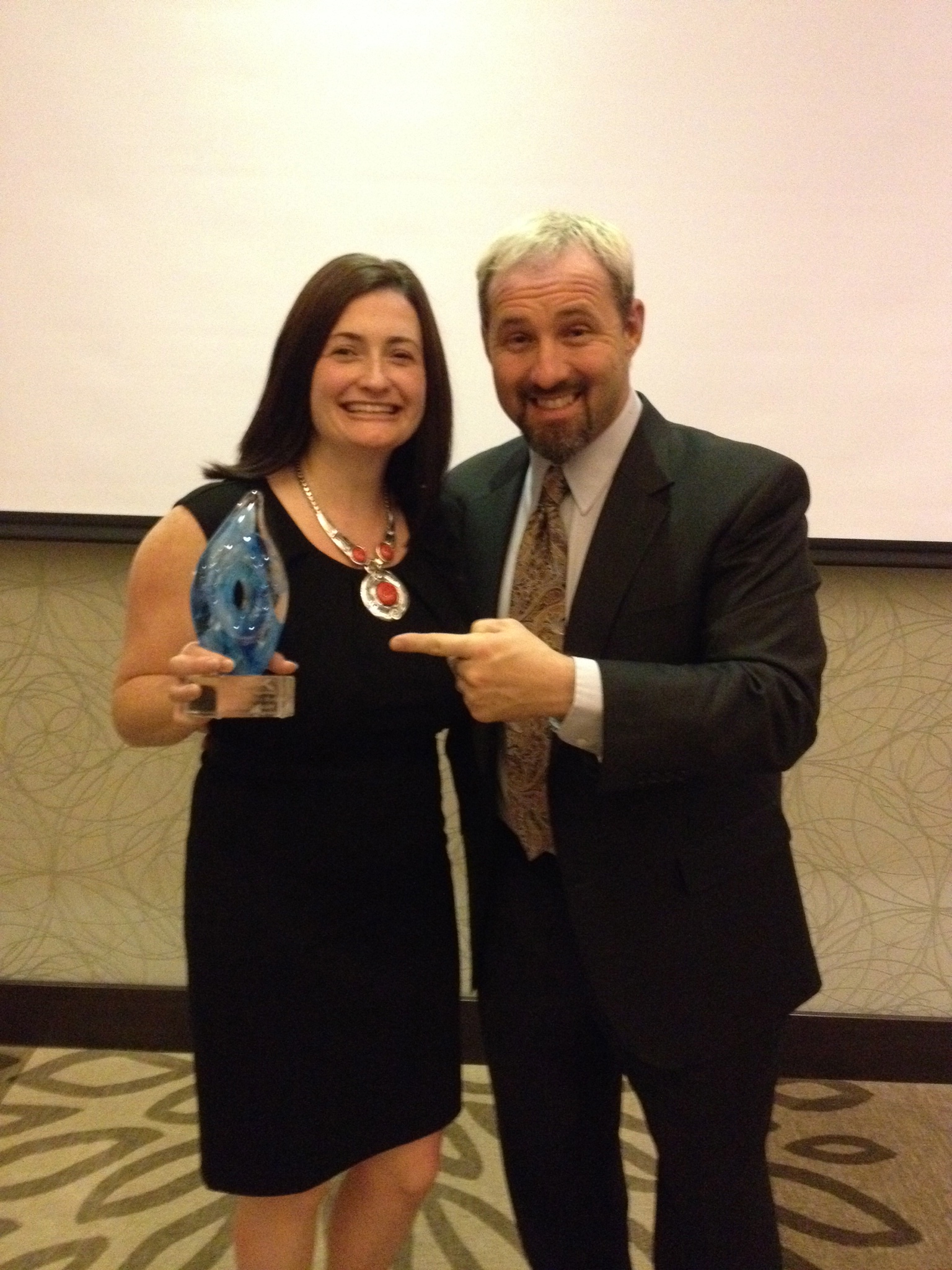
The last night we were there was the Volunteer Recognition Dinner. Four people were awarded a Franny, the volunteer of the year award for 2013. Chris had broken down and told me he nominated me a couple weeks prior — so very sweet — but that did nothing for my slow processing as one of the winners was described as having a son Connor’s age, a blog with the same amount of hits and followers as mine and involved in similar activities. I thought, man, who is this person leading such a similar life? Oh it was ME! ME!

IMG_6512

Then, like a jerk, I forgot to thank Chris a la Hilary Swank and Sean Penn who ended up divorced after their Oscar acceptance speech snubs of their significant others. He swears it doesn’t matter, but just in case: THANK YOU, MY AWESOME HUSBAND!

All the winners.

Well, if you haven’t read it yet, check out my post from Sunday here. It is now my most read and shared post of all time. I’m thrilled to help get the message out on the potential benefits of medical cannabis. Though I can’t help but wonder why you all aren’t as intrigued when I blog about my repetitive dreams of my teeth falling out or weight loss powder shakes…

IMG_6498

With Chris Hawkey.
With Chris Hawkey.
With CEO and President of the TS Alliance Kari Rosbeck.
Grandma and Grandpa took Connor to aquatic therapy while we were gone.
Grandma and Grandpa took Connor to aquatic therapy while we were gone. We did it! Four whole nights away! Guess we’re ready for the islands…

Please check out my latest post at Mommy Hot Spot.