Tag Archives: diagnosis

Life With TSC & Autism — Trystan’s Story

Second Annual “Blogging for TSC Awareness Month” Day 11

by guest blogger Marie James   (Carmarthenshire, Wales, UK)
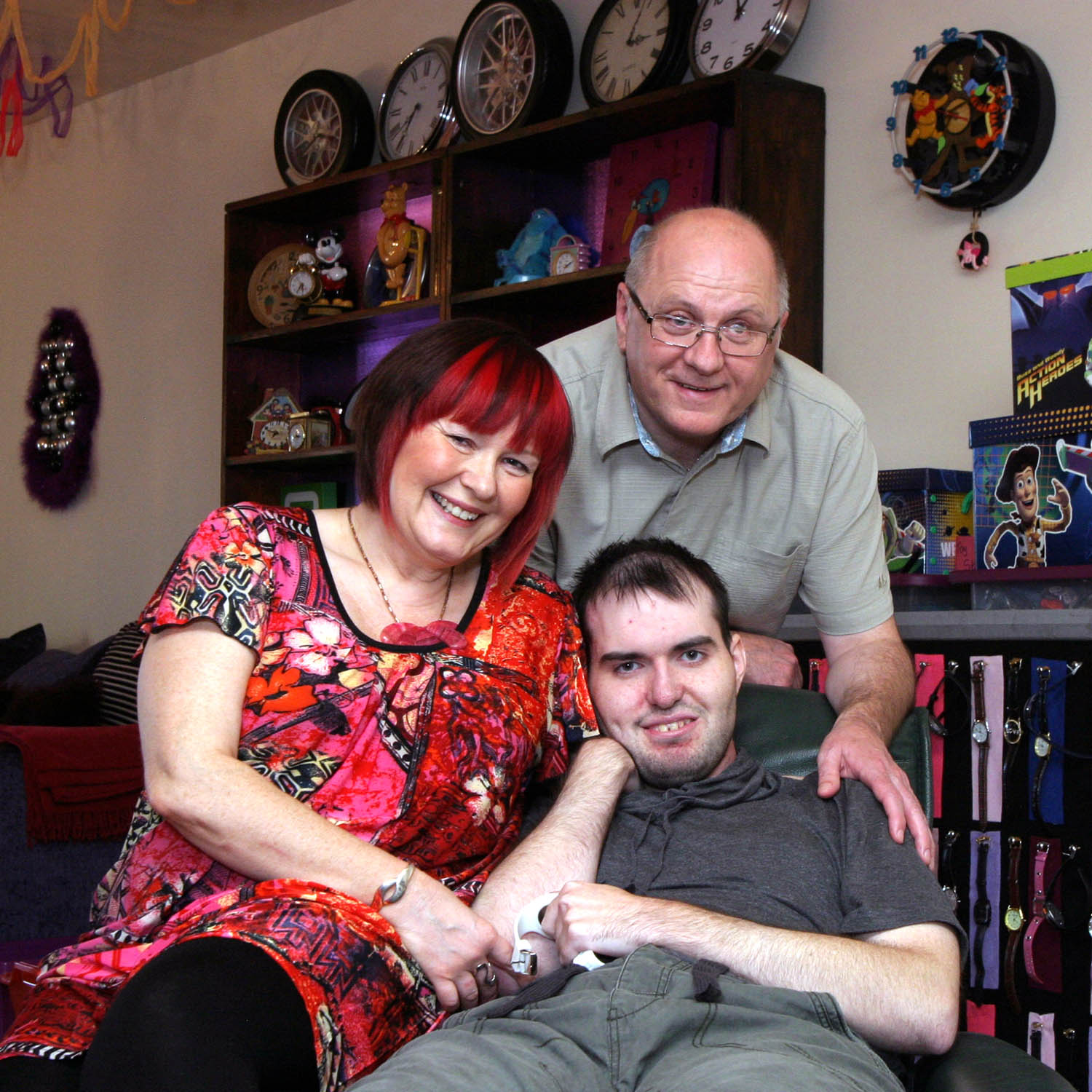
8031   1   TrystanTrystan is 27 years old and lives with Perry and Marie, his mam and dad, in Carmarthenshire, Wales, UK.

First written in 2008 for the Tuberous Sclerosis Association (UK) SCAN Magazine and updated for May 2014 TSC Awareness month in the USA and Awareness week of 12th – 19th May in the UK.

Because of the difficulty Trystan has in understanding the world around him we often live life as if treading on eggshells. Since he was a baby we have taken each day, one at a time…

Back in 1987 when Trystan, our youngest son, was only 8 months old we learned that he had TSC.

For him, like many others, it means a life of dealing with the effects of tumours in his brain, heart, IMG_2779kidneys and on his skin, unpredictable multiple types of seizures, learning disabilities, hypertension, osteoporosis and complex autism.

It was in 1995, when he was nearly 8 years old, that Trystan was diagnosed as having complex autism, and the whole family were able to sigh with relief. For us, the diagnosis meant some understanding towards making sense of a range of rather unusual behaviours. These included a constant need for reassurance; the fear, fascination and obsessional relationship; and the difficulties that changing activities can cause, e.g. refusing to get into the bath and once in the water, often refusing to come out.

The additional label of autism was also the key to unlocking access to educational provision that we were seeking at that time, to help address some of Trystan’s fundamental communication and social needs.

Trystan has limited verbal communication and an avoidance of social interaction. When in a group he isolates himself and appears to spend most of his time pre-occupied with his own ritualistic interests and obsessions.

All it takes to trigger obsessional episodes is a clip of an old home video which prompts a need for a long forgotten toy or an advert on television. Trystan has had inconsolable compulsions to acquire such things as tinned cat food – just for the label, as you may have already guessed, we have no cat.

Over the years he has had a wide range of obsessional interests. Some of these developing from an initial fear phobia and fascination phase to a full blown all consuming obsession. For example, from the terror and panic caused if a fly enters a room, to being absolutely engrossed with catching and observing flies in a plastic pot. The desensitising programmes used for this fly phobia start in April of each year when the flies first appear and usually have some effect by September time when flies tend to disappear. With no exposure to flies over the winter months by each April, we are back to stage one, every year! Nevertheless, we persevere.

On occasions, flooding Trystan with exposure to seemingly all consuming obsessions has enabled him to develop some of these obsessions into healthy interests.

Years ago, if Trystan spotted a Mini car whilst out and about on one of our many ‘diesel therapy’ trips, he would insist that we pursue the Mini for a number of miles. As a result of his interest in Mini cars Trystan was motivated to learn more about them, giving us the opportunity to help teach him colours, numbers and letters (from number plates) and even different car models. A trip to a two day Mini exhibition at the NEC in Birmingham in the mid 90’s did the trick as regards flooding him with seeing Minis. Since then he has been contented to observe, pass and thankfully, not pursue.

Whilst most major obsessions have, with a little patience and different resolutions, been turned into such interests, unfortunately not all of Trystan’s obsessions have been as educational, or as easy to resolve. The constant repetitive rewinding of little clips of his favoured videos have left us close to becoming demented on many, many occasions.
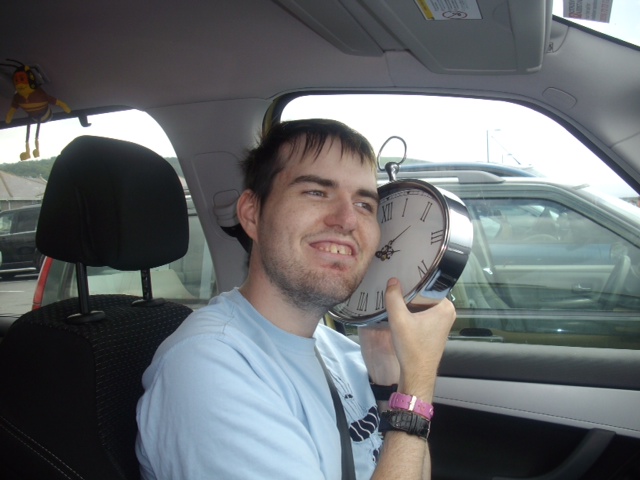
Trystan JamesCollecting new clocks or watches is a long term favoured passion with, by now, over 300 accumulated. Random alarms and timers go off during all hours of the day and night, making us jump into immediate search mode to find and switch off the offending timepiece. Trystan is absolutely fascinated by each and every one of his clocks, the sounds, setting the time, the moving hands and the mechanisms. Despite this interest he is unable to tell the time; apart from when it’s three thirty. (His school day finished at this time and Trystan on occasions would turn his class clock forward in the expectation of his taxi arriving to take him home.) With all these clocks in the house, needless to say, that British Summer Time hour changing causes considerable confusion when resetting the clocks in our household.

Slotting is another long term obsession. During visits to the seaside, the sand and sea hold little interest for Trystan; he has his radar on full alert for the amusement arcades and their coin slots. He has an impressive collection of money boxes and we are adept at improvising all sorts of containers into coin slotting boxes.

Many contented hours are spent on slotting money, clock watching and his game consoles. Trystan’s bag always contains a variety of these items to enable him to tolerate environments he would otherwise find really difficult when out and about.

Music has always been a source of pleasure and joy for Trystan. He acquired language skills from imitating the tone and pitch of songs. When he was 9 he started 1:1 dancing lessons, with music as the enticing motivation. He has achieved many grade medals for his versions of traditional dance routines. Best of all, from this stems his enthusiasm and enjoyment on the dance floor at any disco, often regardless of the number of people there. Whilst Trystan enjoys others singing and dancing in his company, his dad and I are restricted from doing so; one look from him will usually stop us in our tracks to avoid knowingly upsetting him…. and to Trystan, finger tapping on the wheel of the car whilst cruising and listening to music, constitutes as dancing!

Recognition of his accomplishments is relished by Trystan. He constantly seeks assurances that he and all around are okay. A variety of visual prompts are used to reinforce spoken language to try and help him understand and make sense of what is happening around him.

Trystan labels objects of interest in a way that is logical to him — it is such a huge relief when we are able to figure out the connections that he makes, e.g. asking for the ‘Daily Mirror’ is his way of saying he wants to play ‘Who Wants to be a Millionaire’ simply because the Daily Mirror Newspaper ran adverts during the TV show in the late 90’s. Life is never boring. Trystan certainly keeps us on our toes.

Any, or indeed all, changes in activities can potentially pose problems for Trystan. In reality that means that from the moment he wakes to getting him intoIMG_2850 bed and then off to sleep we are constantly assessing his behaviour. Occasionally the bigger changes seem, on the surface, to be accepted without difficulties. We moved into our current home four years ago and Trystan seems as happy here as he was in our old home, however since the day we moved he has become anxious every time he leaves the house believing he is going back to our former home. We avoid mentioning the word ‘home’ altogether as it triggers anxieties. Although Trystan has some language skills, it is quite limited and much of his communication is by means of us being aware of his body language. Particularly when trying to gauge how well he understands what is happening around him. This helps us assess how he may react to changes in daily activities, such as getting washed and dressed, having breakfast and taking his medication, and what may be planned, for the day. I say may be planned, as Trystan is, almost without exception, in control of that!
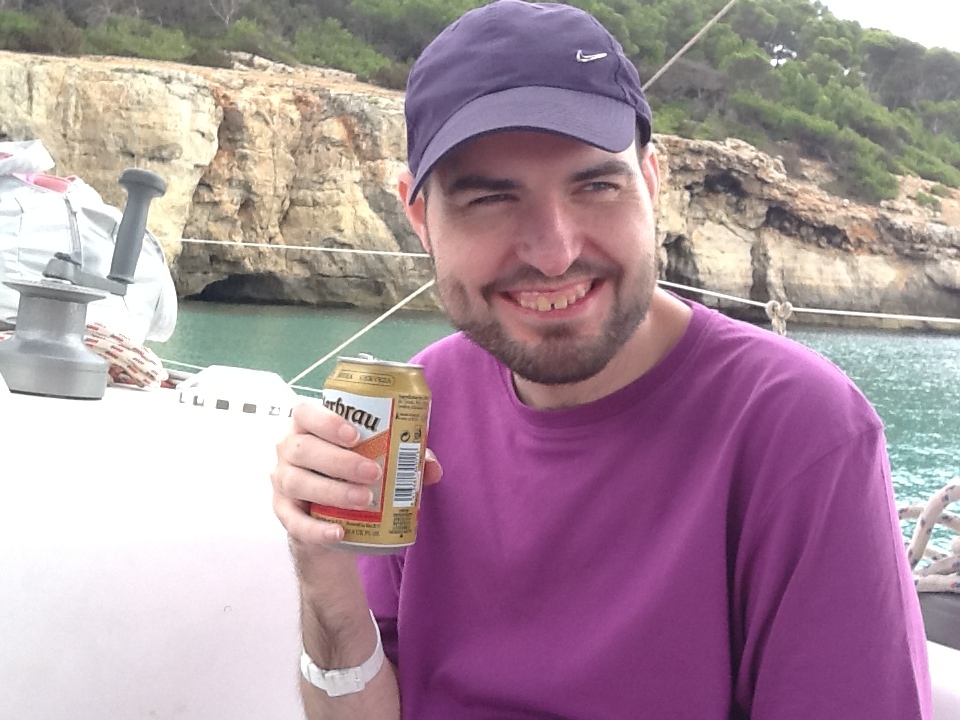
Since leaving school Trystan has a highly individualized person centred package of support. His part time support workers provided 2:1 community and home based assistance and he is enabled to choose what he wishes to do each day. His weekly programme when he concedes to go out into the community includes visits to a local theme park, swimming, exercise gym, bowling, archery, amusement arcades, a host of local beaches and waterfront walks, local woodland parks and an outreach service option from the National Autistic Society’s Neath Day Service.

To make life easier for Trystan, we carefully plan and think ahead on how we present all changes to him and are constantly aware of not saying the word no, or be negative in any way. Even with almost three decades of experience under our belts and despite all our best laid plans, we still manage on occasions, to get it very wrong.

Of course another way of looking at Trystan’s unpredictable and unusual behaviour is the fact that with the TSC, the learning disability, the epilepsy, the mix of anticonvulsants, other significant health difficulties and the complexities of his autism, it is actually quite remarkable that he is able to function and enjoy life as he does. Whilst we pursue every opportunity for Trystan to have new experiences, long gone are the days when we strived to make him conform. The whole family is extremely proud of him, just the way he is and we rejoice in all his achievements.

When Trystan was diagnosed we consider ourselves fortunate that we made immediate contact with the TSA in the UK & learnt of their Research Fund. Raising awareness and funds for the TS Association and getting involved in Research projects whenever possible has proved to be therapeutic & gave us much needed hope for the future.
Remarkable Scientific Developments in TSC Research has been achieved over the past three decades & much of that on our very doorstep at the Institute of Medical Genetics in Cardiff (Wales, UK), by Prof. Julian Sampson and his team. We now, for some of the symptoms, have emerging treatment options; the work on ultimately finding a cure for those yet to be born with TSC is ongoing.

Meeting and sharing information & stories with others who lives are affected by TSC is a great privilege, with lifelong friendships gained.
Thank you to Becky for the invite to blog and to you for your interest in reading. Marie James 🙂

For more information on the TSA in the UK, please click on the links below:

http://www.tuberous-sclerosis.org/
https://www.facebook.com/thetsauk

https://twitter.com/UKTSA

http://www.youtube.com/user/TSAssociationUK 

Waiting for a seizure to happen is no way to live.

Second Annual “Blogging for TSC Awareness Month” Day 9

by guest blogger Jamie Perry  (Deltona, Florida)

At the end of August 2011, I found out I was pregnant with my second child. My husband Joe and I had been married for 10 years and decided to have one more child so my 3-year-old daughter would have a sibling as we didn’t want her growing up an only child. I got pregnant quickly and we were thrilled. At the end of 2011 I found out I was having a boy. I had no problems during the pregnancy and the doctors said everything looked good.

image-1My c-section was scheduled April 18, 2012. On that day I had a beautiful 8 lb 3 oz boy and we named him Cayden George Perry. He was the most beautiful little thing and I was immediately smitten. There’s just something about that mother-son bond. I couldn’t keep my eyes off of him. The birth went smoothly and ,other than a weird red mark on his forehead, he was perfect. My husband and I asked several doctors about the red mark on his head and they would always tell us it was trauma from when he was inside of my stomach or it was a birthmark or it was a bruise. No one actually seemed to know what it was. No one seemed concerned either. Aside from the red mark on his head, he had several large white patches on his legs and arms. And again, we were told they were birthmarks.

After we got out of the hospital, we saw our regular pediatrician. We again asked about his white spots and red mark. We were told the exact same thing. Everyone felt comfortable guessing but no one could give us a definite answer. They said he was fine and we shouldn’t be worried. At 4 ½ months we figured out exactly what those ‘birthmarks’ were. As a mom, I notice everything. I noticed when I would cuddle Cayden sometimes, his body would stiffen up and he would scream out as if he were in pain. I called the pediatrician several times over the course of a week and each time I’d call, they’d tell me it was likely teething, give him Tylenol and that they didn’t feel it was necessary to see him. I told them I saw no bumps in his mouth but they insisted he was fine and I was overreacting.

After a week of dealing with this, I was extremely worried. Tylenol wasn’t helping and nobody seemed to believe me when I told them I suspected something was wrong with Cayden. I got the “you worry too much” speech from nearly everyone.  On the Sunday before Labor Day, he started having one of the episodes and I yelled for my husband to please take a closer look at him. I knew it wasn’t normal. “I think he’s having a seizure.” Those words from my husband will stick with me forever. He scooped up Cayden and took off to the ER. I got my daughter ready and we hopped in my car and followed. The ER doctor agreed with my husband that Cayden was definitely having a seizure but he didn’t know why. He was on the phone with a neurologist when the nurse came in to ask about the red mark on Cayden’s head and the white spots. We said we had asked several doctors and were told they were birthmarks. At that time, I was so confused. Why was my son having seizures? What could white spots have to do with it? A few hours later, Cayden was life-flighted to a larger hospital an hour away. The doctor felt the  white spots and the red mark were genetic markers for something called Tuberous Sclerosis, which I had never heard of. I made the mistake of looking it up online. I was terrified of what was going to happen to my little boy.

The next day, they did a full body MRI on him and confirmed the diagnosis of Tuberous Sclerosis. They mentioned a drug called Sabril that they’d order for imagehim and they were confident it would be helpful in stopping the seizures. He spent 10 days in the hospital and while the seizures didn’t come as often, they were still happening multiple times a day. Joe and I made the choice to move his treatment to Cincinnati Children’s Hospital. From our research, this was one of the best hospitals to treat Tuberous Sclerosis. We started there at the beginning of October 2012. Much to our surprise, on our first visit there, Cayden was also diagnosed with polycystic kidney disease. It seems the old hospital, while they did do a full-body MRI, never read the results. We had brought the MRI on disc with us for the new neurologist to review and the nephrologist reviewed it as well because after taking Cayden’s blood pressure and seeing it was through the roof, he suspected PKD. My husband and I were devastated. We were just getting over the shock of Cayden being diagnosed with Tuberous Sclerosis and now this??!!! It was just so much to process. They put him on blood pressure medicine and the neurologist made some changes to the dosage of his Sabril. Even at the max dose, Cayden’s seizures still continued. And from that point, they continued another four months until a miracle happened. For four months multiple meds were tried. Nothing seemed to help my son. Watching your son have multiple seizures daily is simply heartbreaking. I sunk into a depression and I dimage-2idn’t think I could pull out of it. I shut everyone out of my life. I was devastated that nobody could seemingly help my son. In January 2013, we discussed Afinitor. The doctor decided to take him off of Onfi (as the side effects were too harsh for Cayden). We began to wean Cayden off Onfi  and we were to start a medicine called Dilantin while waiting to get approved for Afinitor.  After three days on Dilantin, something changed with Cayden. When we woke up on a Sunday morning we heard Cayden in his crib moving around and making noises. I was baffled when I walked into his room. He smiled at me! Then he laughed! And then, of course, I cried! I hadn’t seen that beautiful smile in five months. He was so happy and I can’t describe the feeling I felt seeing him smile. I felt my prayers had been answered.

I felt like for the next few weeks I was waiting for the bottom to fall out. But waiting for a seizure to happen is no way to live. So I tried my hardest to just enjoy the seizure-free time that we got with Cayden. Prior to starting Dilantin, he was set up for brain surgery in April of 2013 at NYU Medical Center. The surgery wasn’t successful and while that was extremely disappointing, I was glad that we at least had Dilantin to help with the seizure control. Cayden just turned 2 April 18th of this year. He’s just learning to crawl and stand, he’s saying a few words and he’s sitting on his own. Six months ago, he was doing none of that. I have such a tough, strong, determined little boy! He is my hero and the absolute love of my life. I am so grateful that God gave me such an amazing child and I feel truly blessed to be his mommy!

Every Child Gets One Free Seizure in Life

Second Annual “Blogging for TSC Awareness Month” Day 8

by guest blogger Jordan Martin  (Brunswick, Georgia)

2014-04-059518.34.36

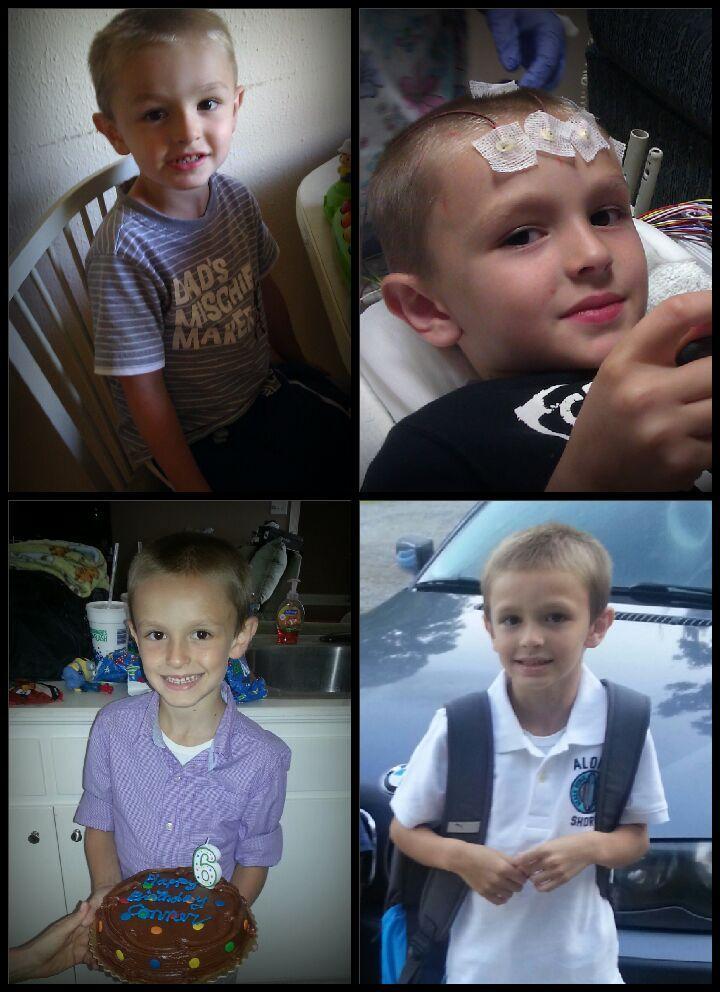
Growing up all I ever wanted was to be a wife and mother.  I always wanted to have 4 kids — 2 boys and 2 girls.  I met my husband Thomas (T.C.) when I was 18.  We have been together for 10 years and married for 7 years.  We have 3 amazing boys: Conner 6, Preston 4 and Aiden 18 months.

Conner Thomas Martin was born on what at that time was the luckiest day of the year July 7, 2007. People to this day when they hear his birthday their first reaction is, “Wow, what a lucky boy!”   I always think to myself, “If you only knew what he has been through”.  To this day I still don’t remember what he looked like the first time I saw him.  I was put under for a cesarean.  Never have done drugs in my life or had ever been in the hospital.  So when T.C. showed him to me for the first time all I remember seeing is a head full of black hair and then passing back out.  I know a lot of parents say this but Conner was seriously the best baby. He was never fussy; he loved to sleep.  He did have acid reflux, but other than that he was perfect.  At around a month old I was sitting on our couch burping Conner and my watch pinched him.  He cried but I checked and didn’t see a mark.  A few hours later when T.C. got home he was changing him and noticed a mark on his lower back.  I assumed it was from my watch and told him what happened. “No Big Deal!!!”

A few weeks later Conner had a check-up and the mark was still there but bigger and risen above the skin.  He also had a red mark on his stomach of a different shape but also red and risen above the skin.  The pediatrician assured us they were “hemangioma.”  Nothing to worry about and would shrink as he gets older.  Well he was right about one red mark.

Conner hit all his milestones right on time.  He was the easiest going little boy.  Never sick, never met a stranger he didn’t know, loved to play outside but was also content being by himself in his room playing.  He was just full of life.  In 2009 we had our second son Preston Robert Martin.  He was born exactly 2 years 2 weeks apart from Conner.  He was by far not the best baby.  He was miserable.   Teething but couldn’t cut teeth.  I tell him all the time “I would never re-do you as a baby again.”  Conner loved having a little brother and being able to teach him things.  That is until Preston learned how to crawl and take his toys.  Life was “normal” as could be.  I hate that word “normal”!!!!

Our story begins on September 19, 2010 at 12:15 p.m. Conner was  3 years old.  It was a rainy Sunday afternoon.  The boys woke up at their normal time, considering the night before Conner woke up at 2:45 a.m. throwing up and Preston was up and down cause at this point all his teeth were coming in at the same time.  T.C. was still asleep.   He worked at a mill at the time working 12-14 hour days so on the weekends I let him sleep in.  At 12:00 p.m. I rocked Preston to sleep and asked my mom to watch Conner for me while I did so.

At 12:10 p.m. I laid Preston down and asked my mom where Conner was. She said he was in my room watching Tom and Jerry.  I went into my room and asked Conner to go to the bathroom so we could lie down and take a nap.  I kept calling his name and asking him to get up but he just laid there.  I assumed he was just caught up in the cartoon.  I went and stood in front of the TV and asked him again but NOTHING!!!  I turned around to turn the TV off and when I turned back around his face was turning red and his eyes — it was like there was no life in them.  I said, “Conner what’s wrong with your face!?!”  T.C. immediately jumped up from out of bed and picked him up.  Mind you neither one of us had ever seen a seizure before.  I went into the next room and got my mom.  By time I was back in the room he was foaming at the mouth, had peed himself and was convulsing.  T.C. handed Conner to me and told me to get in the car.  He threw on a shirt pants and didn’t even bother to find his shoes.

We live right down the road from the hospital.  We pulled up so fast they must have seen us coming because they came running out to get him.  They were asking all kinds of questions.  I couldn’t process anything.  Conner couldn’t talk for 4 hours.  He was completely out of it.  Once he was stable and coherent they moved us to a room for overnight observation.  They ran tests and did scans.  The next day the doctor came in and said everything came back “normal.”  It was just a spiked fever that caused the seizure.  I looked at him with my husband, Conner’s grandparents in the room with us and said, “My son doesn’t spike fevers”!  I can count on one hand how many times he has ever been sick.”  I just knew it was something more.  The doctor looked at me and said “Every child gets one free seizure in life.”  I’ve never wanted to punch someone in the face so bad before.

By time we were discharged it was too late to call his pediatrician so the next day I called and scheduled an appointment.  It would be Friday at 3:30 before they would be able to see him.  Tuesday he was fine and back to normal.  Wednesday at 3:00 p.m I was sitting on the couch and Conner called my name.  I said, “yes baby, come here”.  He didn’t answer.  I immediately got this sick feeling in my stomach.  He called me again and when he came over to me he was staring off and his eyes were twitching a little.  It only lasted about a minute.  I thought maybe he was just tired.  I had never heard of staring seizures or any other types besides grand mal.  Oh I learned fast!!!

I told my mom and I think she thought I was being paranoid.  Thursday same exact time, same exact thing.  Friday while I was getting Preston to take Conner to his appointment, he did it again but this time my mom saw it.  His pediatrician informed me they were staring seizures and she was setting us up to see a pediatric neurologist in Savannah and that she was also ordering him to have an EEG done.

Appointments were finally approved through insurance and Conner had his first EEG done in November 2010.  The neurologist appointment was also coming up, but right before Thanksgiving I received a letter stating they had to reschedule it to the end of December.  By this time Conner’s seizures were worse and every day, sometimes resulting in emergency room visits.  We decided after we came back from Thanksgiving in Florida we would go to the hospital in Savannah and pray they would see him or anything.

While in Florida I received a call from the hospital about his EEG results.  Even though Conner was awake it showed abnormal study due to the presence of spike and sharp wave activities in the right hemisphere, which would be consistent with a few focal seizure disorder.  A few days later there we were walking into the emergency room in Savannah.  The lady at the front desk just looked at me like I was crazy when I was explaining what we were doing there. We weren’t leaving any other way.  Conner, being the helpful child he is, decided to speed the process a long faster and started having a seizure.  We noticed that anytime Conner gets nervous, scared, surprised, overly excited or any loud noises tend to make him have seizures.  She immediately called and they came and took us to the back by time we were in a room he had stopped seizing.  We told the on-call doctor what was going on so he said to give him a minute.  An hour later he came back and told us he called the neurologist office and they would see us in 30 minutes.

Dr. Mortez was the neurologist.  She was really nice and we explained everything that had been going on.  She said she was ordering an MRI and requesting all of Conner’s labs, test results and scans done the day he first seized.  Along with those she also wanted the results of his EEG.  She prescribed him Trileptal and would see us back in 2 months.  If only it was that simple.  Conner’s seizure got worse even with the medication and by the time 2 months rolled around we still hadn’t had the MRI.  She increased his medication and said she would call about the MRI.  By now ADHD and aggression had set in and his hostility was always towards his brother and me.  Still is to this day.  T.C. ended up calling our insurance company up and having a few choice words with them because they still hadn’t approved his MRI.  Needless to say a few days I received a call from the doctor’s office with an appointment scheduled.  February 17, 2011 he would have his first MRI done but not his last.

February 18, 2011 T.C. was sick so my parents, Preston, Conner and I all went to Savannah to receive the results from the MRI.  I was honestly expecting for it to be a simple case of epilepsy. BOY WAS I WRONG!!!  My dad stayed in the waiting room with Preston letting him play with the toys.  My mom went in the back with Conner and me.  In walks Dr. Mortez and from then on it was like an out of body experience.  “The MRI didn’t turn out how I was expecting it too.  It’s more serious than what I was hoping for.” She says.  My mom later on told me I turned ghostly white when she said that.  She then explained that Conner had Tuberous Sclerosis.  Something I could barely pronounce, let alone spell.  She explained how his body produces tubers/tumor like growths on his major organs.  Now we were being referred to MCG in Augusta, now Georgia Regents Medical Center, to the epilepsy department.  She assured me it was a good hospital and that they have lots of experience with the disease.  She also explained how the spot on his lower back was a “shagreen patch” not “hemangioma” and how the spot on his face that popped up over the holidays was a “focal angiofibroma” and not a mole like I thought.  My mom took Conner out of the room by then so I could talk more with the doctor.  He would now need to have kidney and heart ultrasounds and have his eyes checked as well.  Soon I was left alone in the room.  Not wanting to cry or get upset; just wanting to reach my husband.  All I could hear were the words tubers/tumor like, more doctors, brain surgery, etc going in circles in my head.  This isn’t going away!!!

When we arrived at home I tried explaining it as best as I could to T.C.  I still hadn’t cried.  I couldn’t let myself.  I honestly don’t remember anything after that besides putting the boys to bed.  When I got in bed I completely feel apart.  T.C. just held me. All I could do was cry.  I didn’t understand how this happened.  How my perfectly healthy child could have been born with this and no one knew it.  How could he just start having seizures out of the blue?  It made no sense.  I was pissed, sad, so many emotions rolled into one.

The next day I just spent lying in bed depressed really.  I couldn’t process all of it.  I needed a day to collect myself.  I was numb to be honest.  So my parents took care of the boys that day and my mom took all the phone calls from family members explaining what was going on.  I definitely went through the seven stages of grief.  I think my husband was stuck in anger and denial for a while.  You mourn the life you had and accept this is your new life.  The next day was filled with phone calls to the cardiologist office, setting up kidney ultrasound and eye appointments.  I had one doctor tell me they had only read a paragraph about it med school.

Dr. Mortez told me that if after two weeks if Conner was still getting worse after the last increase of Trileptal, to call and let her know.  Of course his seizures were still increasing and he ended up in the hospital again.  I called her the next day and left a message.  I was surprised when she called back within a few hours and informed us she called Augusta and they were moving his appointment up and we would be getting a call from them to set up an appointment.  She said since his medication hadn’t been working at all he needs to be monitored soon as possible.  Good news was his eyes didn’t have any tumors.  His heart had two small ones but they weren’t causing any damage so they just need to be monitored.

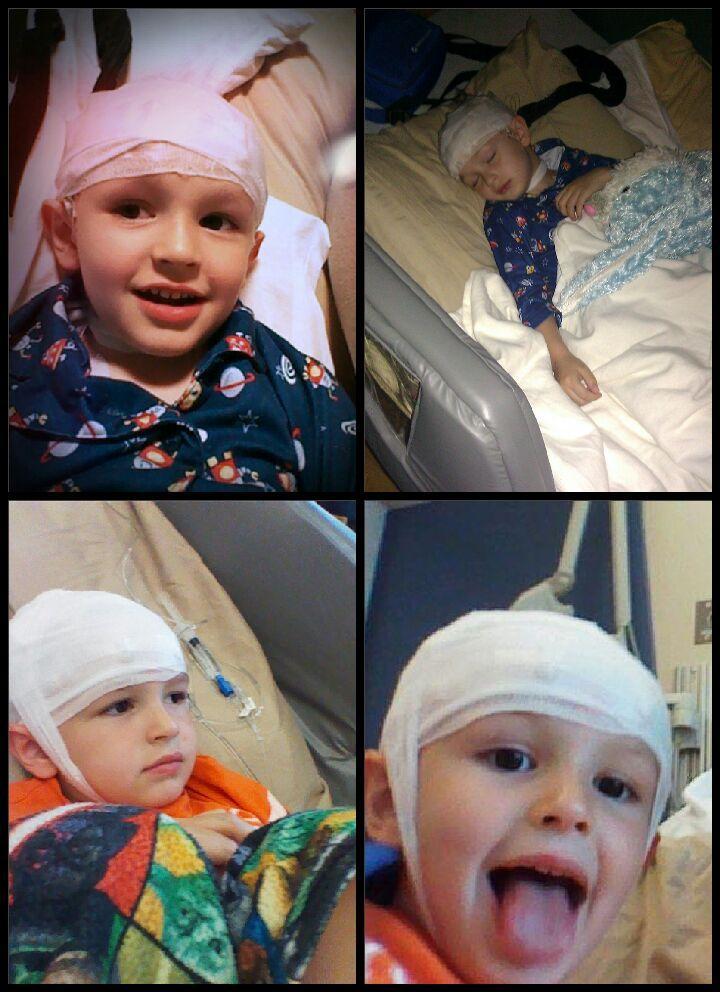
2014-04-059518.25.55A few weeks later we were in Augusta for Conner’s three-day EEG monitoring.  Dr. Park is head of the epilepsy department in Augusta and Dr. Strickland is the neurologist there.  They are Conner’s doctors still to this day.  Conner was monitored for three days.  His seizures were mild and very little — not what we were expecting, which was unusual for him, until the last morning when he had 10 seizures within a 30 minute time frame.  The doctors came in a little later for rounds and said, “That was good we got everything we needed.”  They were a little too excited about all the seizures at the time I thought.  But I understand now.  They said it’s amazing you are able to press the button right before he starts seizing. I said is that good?  They said, Yes. it means we got everything from the very beginning of his seizures to the ictals.”  They asked how we knew before they started.  I told them how sometimes Conner knows before he is going to have one and he will come find someone, and sometimes he also gets this look on his face right before he starts seizing.  I also explained how I can feel it in my stomach right before as well; it doesn’t matter if Conner is in a different room. I get this sick feeling in my stomach.  It sounds crazy.

They informed us of all the testing coming up to see if he was a candidate for surgery.  They also told us Conner’s was a “spontaneous mutation” in his gene while I was pregnant.  We also found out that the doctor in Brunswick who said all his scans came back “normal” read them wrong.  It clearly states there were “abnormal” findings in his frontal lube.  I thought I was going to lose it.

The next few months we spent traveling back and forth.  By then Conner was on Lamictal as well as Trileptal.  It was hard financially on us but we managed with the help of family and friends.  Conner was being tested to see if he was a good candidate for surgery.  Turns out his seizures came from both right and left frontal lubes more so from the right.  Soon he was on Keppra, Lamictal had been increased and taken off Trileptal.  We also had to add Clonidine because his ADHD was so bad he couldn’t sleep but three hours at a time most nights.  He was also becoming more aggressive and having more meltdowns.  At this point even my parents couldn’t handle him bouncing off the walls and acting violent towards everyone.  I felt trapped in my own home with no help.  T.C. worked full time so I could stay home with the kids.  I literally felt like I was abandoned by everyone.

Conner didn’t understand why all of the sudden he wasn’t allowed to go anywhere.  Places he has been to his whole life; it wasn’t fair.  One day I lost it!  Conner was having a bad day — just one meltdown after the other.  I ended up locking myself and Preston in the bathroom just to get away from him and the constant hitting, kicking, screaming, etc.  I called my mom and my best friend’s mom, who is Conner’s other grandmother and just started yelling about how I felt like everyone abandoned him and me and how this disease was taking over my life it felt like.  I needed them to stop worrying about how they felt or were scared of what might happen and think about what he feels and how confused he is.  He would say, “Mama, I’ll try to be good. Trust me.”   “I won’t hit Preston or scream or anything.”  It broke my heart every time, but after the talk with all the grandparents, they understood and began spending more time with him and Preston and were there for me too.

Summer of 2011 came and Conner turned 4.  He would be starting Pre-K soon which scared me to death because he was still seizing every day.  He was now also having them every night so he started sleeping with me and TC slept on the couch.  A few days after his birthday we had an appointment with the neurosurgeon.   My husband, my Dad, Conner and I  drove up to Augusta the night before since it was an early appointment.   The appointment the next morning consisted of the doctor going over the pros and cons of Conner having brain surgery for his seizures since the medication still wasn’t working.  His opinion was that Conner’s best option was to have the surgery.  So, we decided to go ahead with the surgery.   After that TC broke down, but I stayed calm for him and Conner. I’m the level-headed one when everyone else gets upset.

The surgery was scheduled for October of 2011. Since Conner would have only been in school a short time, the doctor suggested he not start since recovery 2014-04-059518.29.42time could be long.  So we withdrew him from school registration.  He had been so looking forward to going. He saw some of the pictures his friends had posted on Face book of their first day of school.  I hated seeing him upset so I put on his Thomas the Train book bag, stood him in front of the door and took his picture.

September 19, 2011 was exactly one year since Conner’s first seizure.  My parents had the boys for the night.  I was lying in bed, waiting on TC to get home from work and I couldn’t sleep.  I was thinking about the day Conner’s seizures started. Everything just hit me all at once: the past year, all the appointments and medications, seizures and the tests his little body had to endure …and now Brain Surgery!  It just wasn’t FAIR! By the time TC got home I had been crying for an hour.  I had tried to hold all my frustration and feelings in for so long that I felt like a dam had burst inside of me.  It all came pouring out.

The next night Conner had 20 seizures in one hour and I thought this would never stop!!!  The next day Conner didn’t have any seizures or the next day or the next.  Four weeks later…still no seizures.  Everyone was so happy!  Of course I, being prepared for the worst to happen, couldn’t allow myself to be excited.

Conner’s surgery day was fast approaching.   My husband wasn’t feeling comfortable with Conner having the operation since the medication seemed to be working now. We talked it over again and decided to cancel the surgery.  The holidays came and went. Conner was still seizure free although his aggression and his impulse control were still big issues we still had to deal with.     2012 was a good year!  We had an unexpected surprise….we were expecting again.  Conner had, maybe, three seizures that year.  He had no new tumors in his brain, heart, kidneys or eyes.  He got to start Pre-K and loved going to school.  Conner and Preston loved having a new baby brother.  It was just a great year.

March 2013 and it’s time for Conner’s yearly checkups.   Kidneys are first.  By now TC and I know what to look for on an ultrasound. We immediately saw the tumor on his right kidney. It’s not very big, but still, it wasn’t there last year.  So now we go to Augusta to see Dr. Ortiz, Conner’s nephrologist, every three months for blood work and every six months for ultrasounds to monitor any new growth.  At least his heart and eyes are still doing well.              School ended and what we planned to be a fun, enjoyable summer was instead filled with stress and sadness.  My Nana, who was living with us, was diagnosed with stage four lung cancer.  Our days were spent with over fifty people (Hospice, relatives and friends) coming and going from our home.  Ten people were actually living 24/7 on air mattresses throughout the house.  Conner’s anxiety and stress level kicked in as did his seizures.  The boys were very close to their Nana.   Summer came and went and Nana passed away.

School started again.  Conner started Kindergarten and Pres started Pre-K.  Two boys in school!  Yes! Even though I had given Conner’s new teachers and school information on his disease, I don’t think they were prepared for the first day. His anxiety was through the roof, he was having a major meltdown, just a really bad day.  But the next day he did really good and had a good day.

Conner is doing really well in school this year (2013-2014 school year).  His anxiety level is up and down. The amount of sleep he gets affects what kind of day he will have.  He still wakes up two to three times a night most nights so the next day is guaranteed meltdowns, staring seizures, and being emotional.                                                                                                                                  Right now Conner is just like any other six year old little boy.  He does get tired a little more easily due to medication.  He is now on Lamictal, Keppra, Topramax for seizures; Clonidine, Melatonin, to help him sleep and Lisinopril for his kidneys.

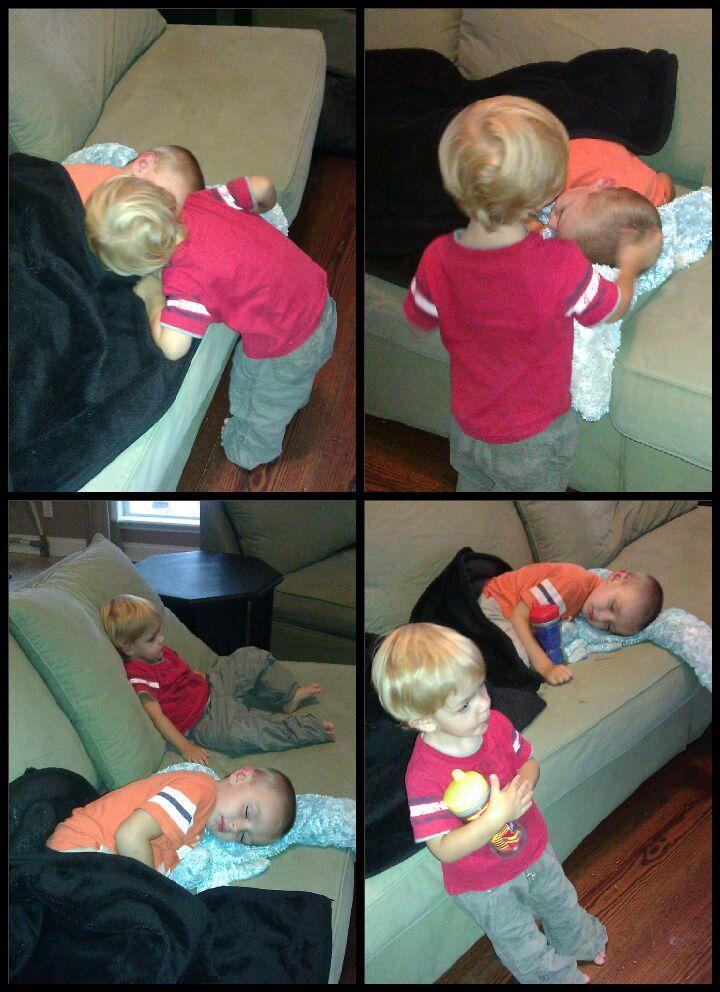
Conner understands as much as much as a 6-year-old can, that he has a condition called TSC.  We never treat him any different or any more special than his brothers.  As much as this is about Conner and our journey with TSC, it’s about Conner’s brother Preston too.  He is Conner’s rock.  They may fight and argue nonstop and are like night and day but Preston is always there, and always has been to make sure his brother is ok.  Preston understands that Conner has lots of doctors and he has seen everything his big brother has went through. He would sit next to Conner for two hours when Conner fell asleep after a bad seizure. Preston always made sure that when Conner woke up he had his favorite bunny, his Sippy cup and whatever toy he had sitting next to him so they could play together.

It scares me to death to think of Conner as an adult, letting him grow up and be in charge, or have a say in his healthcare.  I know it isn’t anytime soon but I will have to learn to let go and he will be ok.  He is the strongest little boy I know. I am no longer bitter or angry that he has TSC.  I’m trying to embrace Conner for his differences and his sometimes extreme passion and stubbornness.  He gets that honest.  I don’t worry what people think about him or us if he has a “meltdown” in public.   What is deemed “normal” nowadays any way?  People judge what they don’t know or understand. Some days are better than others and sometimes you feel like you have been defeated but at the end of the day it will be over and something better will happen.

This is our TSC story.  It is nowhere near over; it’s really just begun.  Sometimes it feels like a lifetime ago when we tell stories about Conner or life before TSC.  It’s like a different family.  If anything, I want to teach my kids that a disease does not define you as a person or give you an excuse to do wrong.  It makes you a stronger person and can bring a family closer together.  It makes you love and appreciate one another more and treasure every moment you have together.

2014-04-059519.02.09


Unexpected Blessings

Second Annual “Blogging for TSC Awareness Month” Day 7

by guest blogger Jonna Stromberger  (Iliff, Colorado)

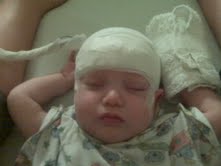
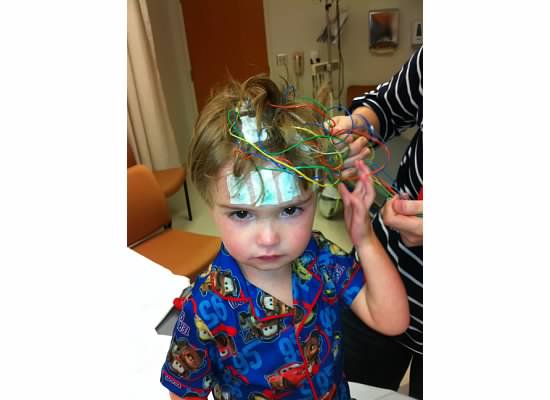
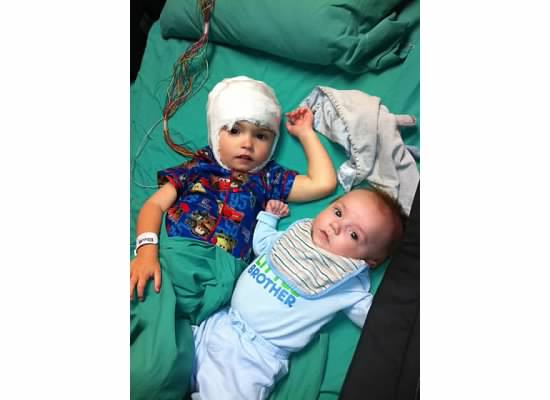
eeg1Our story with Tuberous Sclerosis begins on February 27, 2010.  Bailey Rae – the baby girl her Dad, I, and older sisters had been waiting for, had finally arrived!  Three weeks early, and full of surprises yet to come!  The first four months of Bailey’s life were exactly what you would expect from a newborn.  We were adjusting to having a baby in the house for the first time in six years.  For the most part our older daughters, Brooke and Alli, adjusted well.

When Bailey was around three months old, I started noticing some jerking movements that didn’t seem quite right.  I talked to my husband about it, and even pointed out the movements several times to him.  I described it to my Mom that Bailey seemed to have the “startle reflex” a lot more than her sisters ever did.  At her four month check-up I mentioned my concerns to her doctor.  If the movements continued, or seemed more frequent, he said we might consider having an EEG done, just to be safe.  That very afternoon, several hours after her appointment, Bailey started jumping in my arms, just as my husband walked in the house.  We packed our bags, and headed to Children’s Hospital of Denver.

After explaining our concerns to the doctors, Bailey was hooked up for an EEG for the first time.  She was poked from head to toe, had ultrasounds, an MRI, EKG, and an ECG.  I’m sure I’m forgetting some of the tests, but it was all so overwhelming to us. Looking back on it now, some of the details seem a little blurry.

June 29, 2010 Bailey was diagnosed with Tuberous Sclerosis.  The little jerking movements were infantile spasms.  Our world was turned upside down.  Bailey HospitalThe perfect little girl that was loved and adored was now fighting some terrible disease that we had never even heard of.  White spots on her skin were explained.  Her team of doctors wheeled in a monitor with her MRI pictures, and her tubers were pointed out to her Dad and me.  Her neurologist explained that TS is different for every person, therefore they couldn’t really tell us how Bailey would be affected now or in the future.  She may not talk, she may not develop fine motor skills, she may not walk, she may not be able to feed herself; I cried.  That’s the one thing I remember doing.  I cried for my baby and all the things I wanted for her in life that she might not ever have.

Bailey started taking Vigabatrin on July 5, 2010, and she didn’t have another infantile spasm.  It seems like we were making trips to Denver on a constant basis.  Bailey began occupational therapy, and continued to meet all of her age appropriate milestones.  All the things I took for granted with her sisters were celebrated by our entire family – rolling over for the first time, her first steps, and then her first words!

On February 24, 2011 Bailey had a febrile seizure and was flown to Denver.  Her doctors thought it was best for her to stop Vigabatrin and begin taking Keppra.  She is still taking Keppra today.  We tried weaning, but had a break through seizure, once again caused by a fever, and decided to keep her on the Keppra.

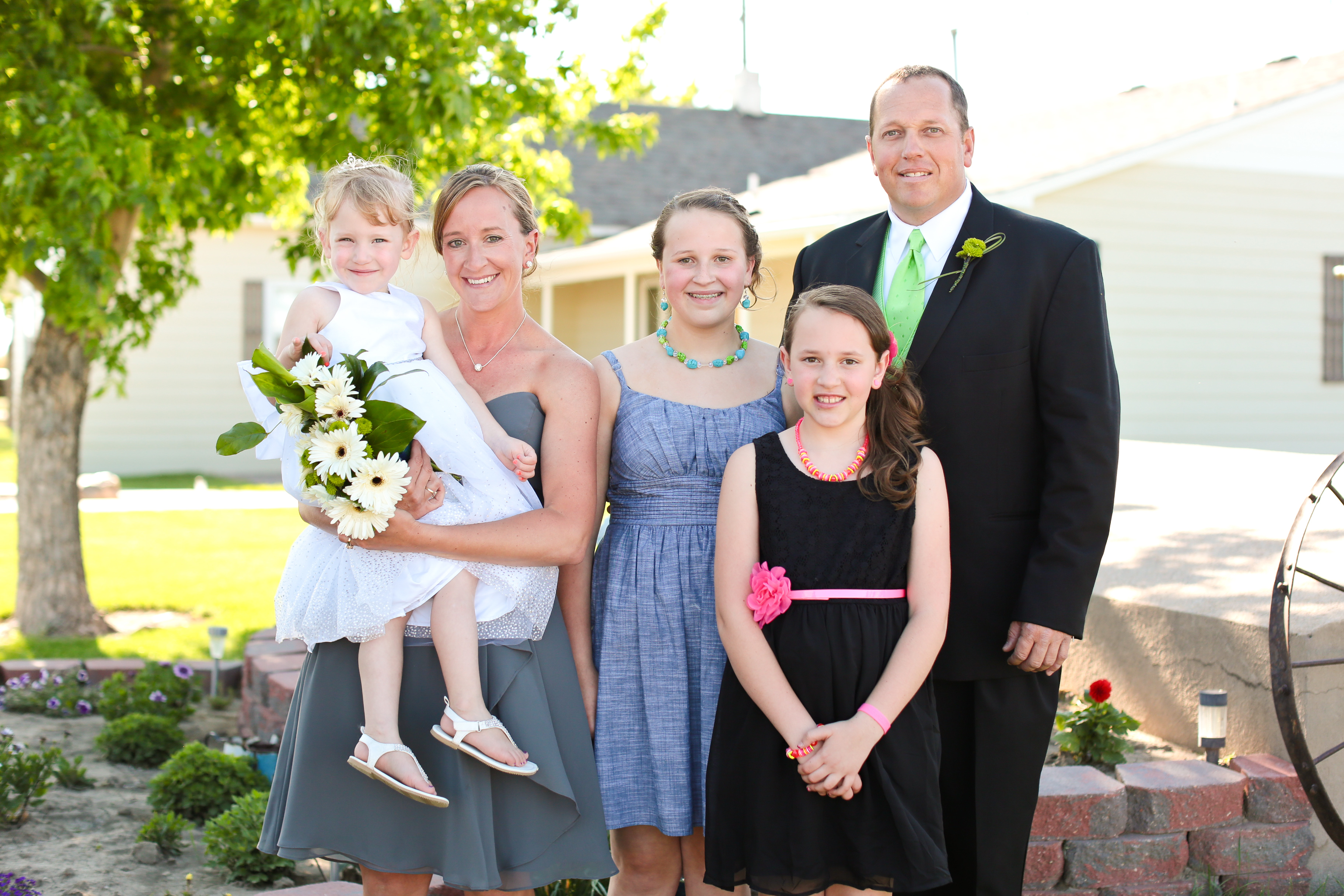
Family PictureOur family has been so blessed.  Some people think I’m crazy to say that, after all we have been through with Bailey.  Our friends see her as a bubbly, active, ornery, typical four-year-old.  I truly feel that God sent Bailey to us for a reason. Bailey makes us smile every day.  Next year will be a big change in our lives, as she will begin preschool.  We don’t know what the future will hold for Bailey, but we don’t know what the future will hold for any of us.  A friend of mine gave me a frame that says “Live By Faith One Day At  A Time.”  That is what we do.  We love each other.  We take care of each other.  We appreciate all that life offers us, and we thank God every day that he gives us with Bailey.

“May God give you…For every storm a rainbow, for every tear a smile, for every care a promise and a blessing in each trial.  For every problem life sends, a faithful friend to share, for every sigh a sweet song and an answer for each prayer.” –Irish Blessing-

iphone 7-26-13 006


We are our version of “picture perfect.”

Second Annual “Blogging for TSC Awareness Month” Day 5

by guest blogger Shannon Grandia  (Riverside, California)

My name is Shannon Grandia and my three children and husband have all been diagnosed with Tuberous Sclerosis Complex.  Rob and I were high school sweethearts with this “picture perfect” ideal of how our life would turn out.  Rob, my husband, had no idea he had the disorder until our first two born began having seizures and were diagnosed with TSC. When Rylee was born she was this perfect, beautiful baby girl and the picture Rob and I had painted for our life seemed to be coming true.   Over her first year of life Rylee was having these abnormal staring spells that her pediatrician was writing off as normal infant behavior.  At 18 months Rylee’s staring spells were lasting minutes instead of seconds and she was now salivating.  This is when her seizures spiraled out of control and she was hospitalized and diagnosed with Tuberous Sclerosis Complex.  At the time we had never heard of the disorder and had no idea what to expect. She had numerous calcifications covering her brain along with one distinct growth, ash leaf spots on her skin and focal seizures. Doctors told us best case scenario is that she did not develop any more growths and she could live a normal life on medication to control her seizures; worst case scenario could ultimately lead to death. Our “picture perfect life” was beginning to unravel.  Because at the time neither Rob nor I exhibited any signs of the disorder we were told that is was a “sporadic mutation” and unlikely any other children we had would have the disorder.  I was about six weeks pregnant at the time of Rylee’s diagnosis, but ultimately lost the baby at 12 weeks.  This put a strong desire in Rob and I to have another child and since we were told it was not genetic, we felt confident that there would be no complications with another child.

Jake was born two and a half years later. At birth he was a happy, thriving baby boy. Doctors told us it was unlikely he would have TSC, but they would monitor him when we brought Rylee in for her appointments.  At a few months old we noticed a couple white spots on his skin, but doctors told us it was a coincidence and he wasn’t showing any other signs of TSC. I am not sure how long we ignored the small staring spells Jake was having, writing them off as normal infant behavior once again but at 11 months old Jake was having a seizure every half hour and had to be admitted to the hospital and was soon diagnosed with Tuberous Sclerosis Complex as well.  He too had the ash leaf spots, three distinct growths in his brain and was having focal and complex partial seizures.  This was devastating news and our “picture perfect” life was crashing in around us.

Two children with TSC was a sign that either Rob or I had the disorder. After genetic testing it was determined that Rob had the TSC1 gene that was passed onto the children, his dad and brother were also tested and found to have the disorder. We did a lot of research and discovered there was a 50% chance of passing the disorder onto a child. A year went by and life was manageable.  Both Rylee and Jake were hitting their developmental milestones, medication was controlling the seizures and it seemed both had a more mild case of TSC. We felt confident that if we had a third child, he or she would be TSC free. We also wanted our kids to know that we loved them so much and we did not want to let TSC guide the decisions for our life.  Looking back this may have been a naïve perspective, yet it gave us Luke, and we would not change that for the world.

We did an amniocentesis with Luke to determine if he had TSC before he was born. Words cannot express the feelings that ran through me when we got the call that our unborn child also had TSC. Because of the diagnosis we did further testing and also knew he had tubers in his heart before he was born.  Luke came into the world three weeks ahead of schedule and spent the first two weeks of life in the NICU monitoring SVT’s of his heart. Luke spent more days in the hospital than out his first year of life. At one point he was having over 80 seizures a day and was close to comatose. He also had chronic pneumonia, RSV twice, asthma and further heart issues. Then at two and a half he was hospitalized for liver and kidney failure along with Pneumonia and the H1N1. This was the closest we came to losing Luke and he spent almost three weeks in the PICU at Loma Linda. This hospitalization also revealed that Luke was aspirating with fluids and he got a GI tube for fluids only.  Was this really my life?

Luke’s complications were some of the most difficult and darkest days. With the focus on Luke, Jake’s behavior began to decline dramatically.  At three years old he was no longer hitting developmental milestones, and was actually beginning to decline.  Behaviorally, Jake was throwing constant tantrums and was extremely aggressive being asked to leave the private preschool we had him in at the time.  Rylee was also having a difficult time during this period.  She was struggling academically, had weight gain from seizure medications and ADHD.  All three of our babies were fighting and I will be forever amazed how their strength brought them and us through those rough days. This was a long ways away from the “picture perfect” life Rob and I had dreamed about.

We have now lived with Tuberous Sclerosis Complex for over 11 years.  Rylee is 13 years old and thriving. She is the least affected and is on the road to leading a long “normal” life.  Rylee still takes medication for seizures and ADHD, and school is not easy.  But Rylee is learning how to be a good student and stay focused.  She is also a good athlete, playing softball for the last 4 1/2 years and now playing club volleyball.  Mostly, Rylee is known for her bright smile, positive attitude, and love of life.  She is an incredible help with her brothers and has a heart of compassion that teaches us daily how to be a better person.  Jake is now 10 years old and has a diagnosis of intellectual delay and autism.  He too still battles seizures, but they are controlled the majority of the time by medication.  He also takes a concoction of medication for behavior.  Jake has recently moved to a severe autism class, in the hopes that we can get better control of his behavior.  The key with Jake is consistency and routine, which is actually good for us all.  He as an ABA, one-on-one aid with him in class and an outside agency now evaluates and helps with intervention weekly. It has been a rough couple years.  Luke is a 1st grader (in a more severe Special Day Class).  He is the healthiest he has been since birth.  We have never been able to get his seizures controlled, but at an average of five a day, he is on the most effective combination of medication so far and has begun the Modified Atkins Diet.  Also, the G-tube and not drinking fluids has kept the Pneumonia away and he has had a nice stretch of staying out of the hospital.  Because of his medical issues, Luke has an LVN that stays with him throughout the day.  Originally, we were told he may never walk, talk, or even live past the first few years of life.  Not only has he defied all the odds, but cognitively is trying to catch up and shocking everyone.  At 7 years old, Luke is saying more words everyday, can now ride a tricycle, can follow routine rules in the classroom and on the playground and makes anyone who comes in contact with him immediately fall in love with those bright, blue eyes and huge grin.

Rob and I take one day at a time and have no idea what the future holds for our children, but it makes for an interesting journey.  We have learned to celebrate the little things in life, trust God has a plan for us and our three children, lean on each other and those around us when we need strength, and see the daily blessings our children give us.  TSC is a horrible disorder, but it does not define who we are. Rob and Rylee are both considered mild, Jake is moderate and Luke is classified as severe.  We pray daily for a cure and that the seizures and complications will miraculously disappear.  But we also are so thankful for our three miracles, the difference they are making in this world and the joy they bring.  You will not meet three happier kids that appreciate life and each other more.  Watching them together is a beautiful thing and they teach us daily how to be better.  Over the years our idea of “picture perfect” has changed and our we are our version of “Picture Perfect.”

DSC_0098


It isn’t going to be easy, but nothing worth doing ever is.

Second Annual “Blogging for TSC Awareness Month” Day 3

by guest blogger Michele Stiefel  (Lancaster, Pennsylvania)

adam 5In March of 1985, our second son was born.  Adam was the baby I could relax with, knowing a bit more the second time around.  But by May, Adam was hospitalized with his first seizures and flown from our local hospital to Children’s Hospital of Philadelphia where he was diagnosed with tuberous sclerosis.  No one in our family had ever heard of this disease.  No one had ever had seizures.  Our world felt like it had blown to pieces.  His four-year-old brother, Ben, felt like he had caused the baby’s illness because he had been so jealous.  Ben began to act out and we sought out counseling to help him and us.  Slowly over that summer, we started to try to find some kind of normal – going to the local mall, taking Ben to his swim lessons and so on.  We waited anxiously for Adam’s early intervention program to have his spot available in the fall, but before we could start – Adam was back in Children’s Hospital with infantile spasms.  The next three years were nothing short of awful as there weren’t the kinds of meds back then that are around now.  We never really got control of the infantile spasms and he went from a smiling baby at 4 months to a lump that didn’t cry, didn’t coo, and didn’t roll over…just laid where ever he was placed and kept on having seizures.  That was our beginning…

Fast forward two years and Adam is five.  The infantile spasms are fading out although his “Heinz 57” varieties of seizures are still around.  But he’s no longer in the fog of IS:  he smiles, has a beautiful face and people fall in love with him easily. He’s learned to sit and crawl. He’s standing but hasn’t taken that first independent step yet.  My husband and I hire his early intervention teacher to do respite with the boys overnight so we can celebrate our 10th wedding anniversary at a nice hotel.  When we get home the next morning, Adam greets us by walking independently around the corner!  Stinker took his first steps while we were away!  It was the best present we ever received.

Early intervention those first five years helped Adam and our whole family to survive.  We learned to hope and dream of a future, not just of limitations but of having him experience as much of a normal life as his older brother with the same opportunities and experiences – adapted Adam-style.   It wasn’t going to be easy but nothing worth doing ever is.

The first big “normal like Ben” goal for Adam was to attend weekend religious school at our synagogue.  There were no other children with special needs in adambmitzvahthe building and our rabbi wasn’t so good at “getting Adam.”   Luckily I’d met another Jewish mom in town whose son was a couple of years older, also non-verbal, who used a wheelchair.  I talked her into joining and we started our own class with our boys.  About the same time I volunteered to serve on the synagogue board of directors because the best way to make things happen is to become a decision-maker with a voice and a vote.  Then the rabbi who didn’t get our kids took another job in another city and the search committee started looking for a new rabbi who would be willing to do Bar Mitzvahs for kids with special needs.  We got a great one.  Our boys started studying extra with the rabbi, listening to Bible stories, handling ritual objects, and being recognized in front of the entire religious school just like the rest of them.

At 13, Adam had his Bar Mitzvah and it was wonderful!  He loved Jewish music, so we hired a Jewish folk singer who wove music throughout the service.  Adam is non-verbal so he couldn’t lead the service like a regular Bar Mitzvah boy would.  Instead he worked for two years to be able to hold a special wine cup upright throughout an entire blessing without putting it down or spilling it.  He learned to hold and “hug” the Torah scroll on his lap without letting go.  Being non-verbal he couldn’t read from the Torah in Hebrew so his brother read for him.  This was special – no one is allowed to touch the Torah scroll where the Hebrew is written.  One uses a special pointer to follow along.  Big brother Ben held the pointer and Adam’s hand at the same time as he read so that Adam could “read with him.”  To keep Adam from fidgeting, Ben used one finger to tickle Adam’s palm because it calms him — all while they were doing the Torah reading.  The sanctuary was full and there weren’t too many dry eyes in the house.  We followed it up with a great party and Adam definitely knew he was the guest of honor!

Adam went to a special needs summer day camp from the age of 8 to 21 and had lots of fun.  Swimming wasn’t his thing but music time was.  He participated in programs as a teen where he got to hang out with another teen or college student and do regular teen things.  He went to four proms and had a date for each one of them!  He discovered blondes… :)…he really likes blondes.

The summer after aging out of school at 21 was scary.  A rare malignancy was discovered in his colon.  Surgery to remove half of his colon and three weeks in the hospital with complications followed.  He was down to 85 pounds and took a good two months to recover.  Then it was time to begin his journey into the world of adult services.  We did not want Adam to be inside four walls all day in a sheltered workshop environment.  So he became one of the first participants in a new pilot program taking individuals with severe adam promdisabilities out into the community as volunteers.  He helped with Meals on Wheels – his staff would drive the car and knock on the door; Adam would hand the lunch to the senior citizen.  He made lots of elderly friends on the route.  He worked in local libraries, pushing the books onto the shelves (with hand-over-hand support by staff).  He was a busy young man and enjoyed being out and about in the community.

Through one of the programs, Adam met Matt who is also non-verbal and has autism.  Just picture two non-verbal guys making eye contact with each other and laughing and insisting on sitting together every day at lunch.  The program staff told me about how great they were together and said, “They should live together.”   I sent our contact info home in Matt’s backpack and his mom called me.  We started to get the guys together on Saturdays for pizza and we began to talk about the possibility of them living together.   News traveled through the system about these two guys and how great they were.  The head of the county intellectual disability department called us, said he’d heard about these two and were we ready for Adam to move into his own place with Matt?   Adam was 24 and we said yes because one of our dreams was that Adam would live with a friend, not just in a place where there happened to be an opening, but with someone he truly liked.  He’s lived there since 2009 and he loves it.  He’s thrived there, gaining in independence and doing things there that he’d never do for me at home!  He’s in a community he knows well, having grown up there.  We are able to keep an eye on things and be involved while we are still healthy and able because we’re in our 60’s and none of us live forever.   As parents our job is to give our kids “roots and wings”.  Big brother, Ben, went to college, started a career, got married, and bought a house.  Adam has his jobs, social life, and lives in a house set up just for him and Matt.

I mentioned that Ben got married.  Guess who was his Best Man?  Adam beamed with joy throughout the entire wedding weekend.  And boy!  Were they both handsome in their tuxes!

benadam

Finally, it’s important to know that we went through really hard times with his tuberous sclerosis, just like a lot of you.  Recently he was diagnosed with Crohn’s disease, totally unrelated to his TS, so he gets two chronic illnesses to deal with and it feels really unfair.  There have been times over the years when I fantasized about throwing my suitcase in the car and heading west and never looking back, but I never did.  Instead we used counselors, behavior therapists, doctors, teachers, compassionate friends and family to help us get through the worst.  Now after 29 years, I see what our family has accomplished and I know we more than survived, we thrived.  We are all better people because of having Adam, TS and all, in our lives.  So keep dreaming of possibilities for your kids – you never know what you can achieve!


I want new TSC parents to know that there is hope.

DSC_0080

Second Annual “Blogging for TSC Awareness Month” Day 2

by guest blogger Brittany Schwaigert  (Memphis, Tennessee)

Our story begins in the spring of 2008. My husband and I had just welcomed our very first child into the world. Greyson was born a beautiful and healthy 7 lb., 10 oz. baby boy and there were no indicators at all that anything was amiss with his health other than a slight touch of jaundice. He was, and still is, such a beautiful child. We were so thankful that he was healthy. We never took it for granted.

Then at two months of age, Greyson had his first round of vaccinations and subsequently developed what looked like sun spots on the tops of his thighs. The vaccinations had been administered in his thighs, though, and I was aware that the appearance of the spots might well be purely coincidental. I was far from panicked, but looking back on it, I do remember that point as being the first time I had misgivings concerning Greyson’s well-being.

Things took a turn when, at approximately three months of age, Greyson started to develop a strange habit. His habit looked to me like the Moro reflex – a phenomenon that occurs when some babies are placed on their backs and respond by throwing their hands out in the air. But in Greyson’s case, this behavior kept happening at strange times, and in clusters. Close family members who witnessed the behavior or were told about it tried to tell me and my husband that it must simply be an immature nervous system, or said that “babies do all kinds of weird things.”  My gut instinct, however, told me that something just wasn’t right.

Then one afternoon, Greyson was lying with me in the bed and I was watching him sleep. All of a sudden it hit me: what if this behavior was a seizure? I practically ran to the computer to find out what I could about behaviors associated with infant seizures. What I found made my stomach sink into the ground. It hit me like a Mack truck that what I was seeing in Greyson was the outward manifestation of a dangerous and aggressive type of seizure called Infantile Spasms. It felt like my world was crashing around me in one split second.

I have always felt that it was the hand of God in my life preparing me for what was to come that, before giving birth to Greyson, I had worked for a pediatric neurologist managing an event facility that he owned. I called him immediately on his cell phone and left him a message. What followed in the next few weeks would be a complete blur.

Greyson was examined by the doctor in his office, but there was nothing that he felt he could definitively diagnose without an MRI. We scheduled the MRI and when the day came, I can say without hesitation that putting a three-month-old infant into an MRI machine was one of the scariest moments of my life. I sat in that MRI room with my baby, freezing to death, trying not crumple into a heap on the floor.

After the results came back from the MRI, the doctor called me at home. He said that he saw “indications of Tuberous Sclerosis.” The doctor explained thatdownload (2) Tuberous Sclerosis (TS) can cause epilepsy, learning disabilities and sometimes even blindness if victims develop the tuberous growths caused by the disease in their eyes (incidentally, this is the reason I feel it is so important to go directly to a TS specialist when anyone is diagnosed with TS. Though I’m thankful we got a diagnosis when we did, due to the relative rarity of TS, I was given barely a shred of information about the disease that would come to change the entire scope of our lives. The only thing I knew about TS was that my husband’s step-mother’s sister had it and she had been institutionalized for years). I looked at my precious baby lying there and suddenly was filled with fear for his future.

After a myriad of other diagnostic testing, including blood work, a lung x-ray, an echocardiogram, a kidney ultrasound, and several EEGs, the neurologist we had been referred to and his group came to the conclusion that Greyson’s condition was, indeed, TS. On top of that, Greyson was also diagnosed with Polycystic Kidney Disease (PKD). Because of the proximity of the genes responsible for both TS and PKD, in many cases of genetic mutation associated with TS, both of the genes deleted at the same time. They did in Greyson’s case, and our lives have not been the same since.

We continued going to this same neurologist for months, even after he said ridiculous things like “I can tell when someone has TS just by looking at them,” or “don’t Google this disease,” or “I guess we can try Vigabatrin (the first line of defense against infantile spasms, which was only available through international mail order pharmacies at the time) but you will have to get it on your own from Canada,” or my favorite (from his associate): “Are you asking me if every spasm is like a bullet to the brain? No, I don’t think so.” Meanwhile, my child was suffering intensely. He was crying every time he had a cluster of seizures and it was heartbreaking to watch. It gives me physical pain to think of it now.

At one point at around six months of age, when my child was incredibly doped up on Phenobarbital and ACTH for his seizures, and bloated to an unrecognizable state, I broke (I am not even going to mention the horror of sticking my child with a needle twice a day). I just couldn’t take the stress anymore and I demanded that he be admitted for a 48 hour EEG. During that hospitalization, Greyson had his life saved the first time. His blood pressure was so high from the ACTH and his PKD that he had to have emergency blood pressure meds put in through an IV. He could have had a stroke at any moment.

IMG00118After that hospital stay, receiving no answers as to how we were going to stop Greyson’s seizures, I made up my mind that TS was not going to get the best of us, or him. I immediately researched the nearest TS clinic. At that time, in 2008, the closest clinics were in St. Louis and Nashville (we are in Memphis). My in-laws live in St. Louis, so that was the obvious choice. I begged the clinic appointment coordinator to get us in as soon as she could. When we met Dr. Wong, the head of the TS clinic in St. Louis, he put Greyson on Vigabatrin/Sabril immediately. For one entire year afterwards, we had seizure control with a  combination dosage of Vigabatrin/Sabril and Topamax. After going through a huge amount of different medicine combinations, we had finally found one that worked. For that year, everything seemed like it might get better.

Then, out of the blue one day in 2010 at a therapy session, the seizures started again. They didn’t stop for two years. The seizures were intense and very frequent. Sometimes, Greyson momentarily stopped breathing and often fell and hit his head. Through all this time, Grey was getting farther and farther behind his developmental milestones. He didn’t crawl until 13 months, he didn’t walk until 21 months, and he didn’t talk until he was five. At this point, I feel I can’t stress enough how important it is to get your child into Early Intervention when he or she has TS. We scoffed at the idea at first because Grey wasn’t behind until he was close to a year old. But, looking back now I would advise any parent to go ahead and start it as soon as possible, since the TS diagnosis alone is enough for your child to automatically qualify for this free service.

In any case, after failing with ACTH, Phenobarbitol, Keppra, Sabril, and Topamax, Dr. Wong was ready to pronounce Greyson’s epilepsy intractable. So, we started to think about a surgery evaluation. Around this time, I noticed that the TS Alliance had designated LeBonheur in Memphis as a TS Clinic. I was thrilled to hear this! My husband made contact with them regarding the Tennessee Step Forward to Cure TS walkathon that I have chaired for the past few years and they offered to see Greyson and give us a second opinion.

This was the beginning of something amazing. Dr. Wheless, the head of the TS clinic in Memphis, and his staff at the Memphis clinic are miracle workers. I cannot say enough wonderful things about how much this man cares for his patients. One of the best things that a doctor can be is proactive and open to listening to patients and their parents. Dr. Wheless started us on the first of several medicine changes to see what would work. We went through combinations of Clobozam, Zonegran, Topamax, Depakote, and Onfi to no avail. He did more MRIs, multiple EEGs, an MEG, and a full surgical evaluation. That unfortunately told us that Grey was not a candidate for surgery, since a cluster of tubers were located in a dangerous area of the brain over the ear, where removing them could possibly do more cognitive damage than good. But Dr. Wheless stayed vigilant.

As a last resort of sorts, when Greyson was four Dr. Wheless suggested that we try Sabril again. By this time, Greyson was having several seizure typesdownload (3) including complex partials and tonics, along with myoclonics, which were the worst offenders in his case. Dr. Wheless said that there was some research indicating that Sabril was working well for complex partial seizures once a patient gets to be a little older. But, TS had something in else in store for us.

The same week that Grey started taking Sabril again, he started to act like he was getting sick. We couldn’t figure out what was wrong with him because there were no outward symptoms except listlessness and extreme lethargy, and some bruising on his feet. I took him to his pediatrician and, bless her heart, she said “I don’t know what is wrong with him, but I know it is SOMETHING. I want you to take him to the ER right now.” That began the worst month of our lives and marked the second time that Greyson’s life was saved.

After numerous tests and several days in the hospital, the ER doctors found that his blood work had come back with severe Leukocytopenia, which means that his body was extremely low in white blood cells. So low, in fact, that he needed a plasma transfusion. Basically, if he would have fallen and hit his head (which he did frequently with seizures and hypotonia) he could have had a brain hemorrhage and died. Dr. Wheless and his team, along with the hematologist concluded that Greyson had gone toxic on his Depakote. He was on a high dose at the time and his body had lost its ability to produce white blood cells. This was after they scared us to death with the possibility of his having leukemia and talk of his potential transfer to St. Jude down the street. We had no choice but to stop Grey’s Depakote dosages cold turkey. Those of you who are epilepsy parents will understand that there is a reason that you wean off AEDs – you never quit cold turkey.

Once we got Greyson stable after the transfusion and his white blood cell count started to improve, we were able to check him out of the hospital after a week-long stay. Mysteriously, he didn’t seize one time during our stay. This was the first time in two years that he had been seizure-free that long. But the horror was really only just starting. As soon as they stopped the Depakote, Greyson began smiling and laughing again after what seemed like an eternity of being doped up and zoned out from all the medicines. Before we checked out, though, I noticed that he was hyper and not wanting to sleep.

250804_3839084948335_1350123231_n-1He didn’t sleep for five days. Greyson had an experience akin to a drug addict  going through withdrawal from heroin. He would scream and cry and want to be picked up and then want to be put down and he would try to climb you like a tree. He ate NOTHING for five solid days, he barely drank anything, and he lost so much weight. It was the absolute most difficult thing that I have ever been through, and it wasn’t even me who was going through it. It was like an alien had taken over my child. His body was literally vibrating. I have never been so scared in my life. No one could tell us what to expect or how long this detoxing process would take, so there was no light at the end of the tunnel. It is difficult to express how horrible this two-week period was on our entire family.

On the fifth or sixth day of this hell week, he finally had a popsicle. We all breathed a little sigh of relief that maybe things were getting better. And slowly, he started to want more popsicles and more drinks, acting more and more like himself. We went through three different drugs that week to get him to relax, including Valium, Klonopin, and Risperdone. The Risperdone was just as scary as the withdrawal symptoms, however, causing Grey to drool and seemingly hallucinate.

After almost two weeks of hell, his body adjusted to the change. We ended up putting him back on the Depakote at a non-therapeutic dose (less than half of what he was taking previously) just to help with behaviors. As soon as he got that first dose back in his system, he fell asleep. It was like the clouds opened up and we saw the light of heaven. He has not seized since.

That seizure-free period has now lasted for 21 months. Every day I think about the next time he will seize. I often have nightmares about it. It is a fear that will never leave your mind when you are a parent of an epileptic child. Any strange movement makes the hairs on the back of your neck stand up with alarm.

I am thankful, so thankful, that Greyson has had this respite from the continued seizures plaguing his mind, his growth, and his life. He has turned into a completely different child. He is a person who we feel we are meeting for the first time and we love every second of it. He still struggles with simple tasks like potty training, but the difference between Greyson at four and Greyson at six is 180 degrees. He began to talk at five years old, and he is now learning new words and phrases all the time.

What I want new TS parents to know is that there is hope. You should always follow your gut and keep pushing your doctors when you are not getting the answers you want and that you deserve. If your doctor will not be proactive and listen to you, then find another one.

I would also encourage TS parents to love your child today – not for what their future will bring, not for what they were before the seizures took over, not for what you imagined they would be – because none of us know what the future will bring. When Greyson was first diagnosed, my best friend said something to me that has stuck with me all this time. She said: “None of us are promised tomorrow. Tomorrow, my child might fall and hit her head on the stoop and be brain damaged.” And, however sinister a thought or remote a possibility that may be, in the end it’s true. We have to appreciate what we have right now, in this moment, because we really don’t know what tomorrow will bring.

She is not tuberous sclerosis. She is my beautiful daughter Estelle.

Second Annual “Blogging for TSC Awareness Month” Day 1

by guest blogger Jennifer Carpenter (Yellowstone National Park, Wyoming)

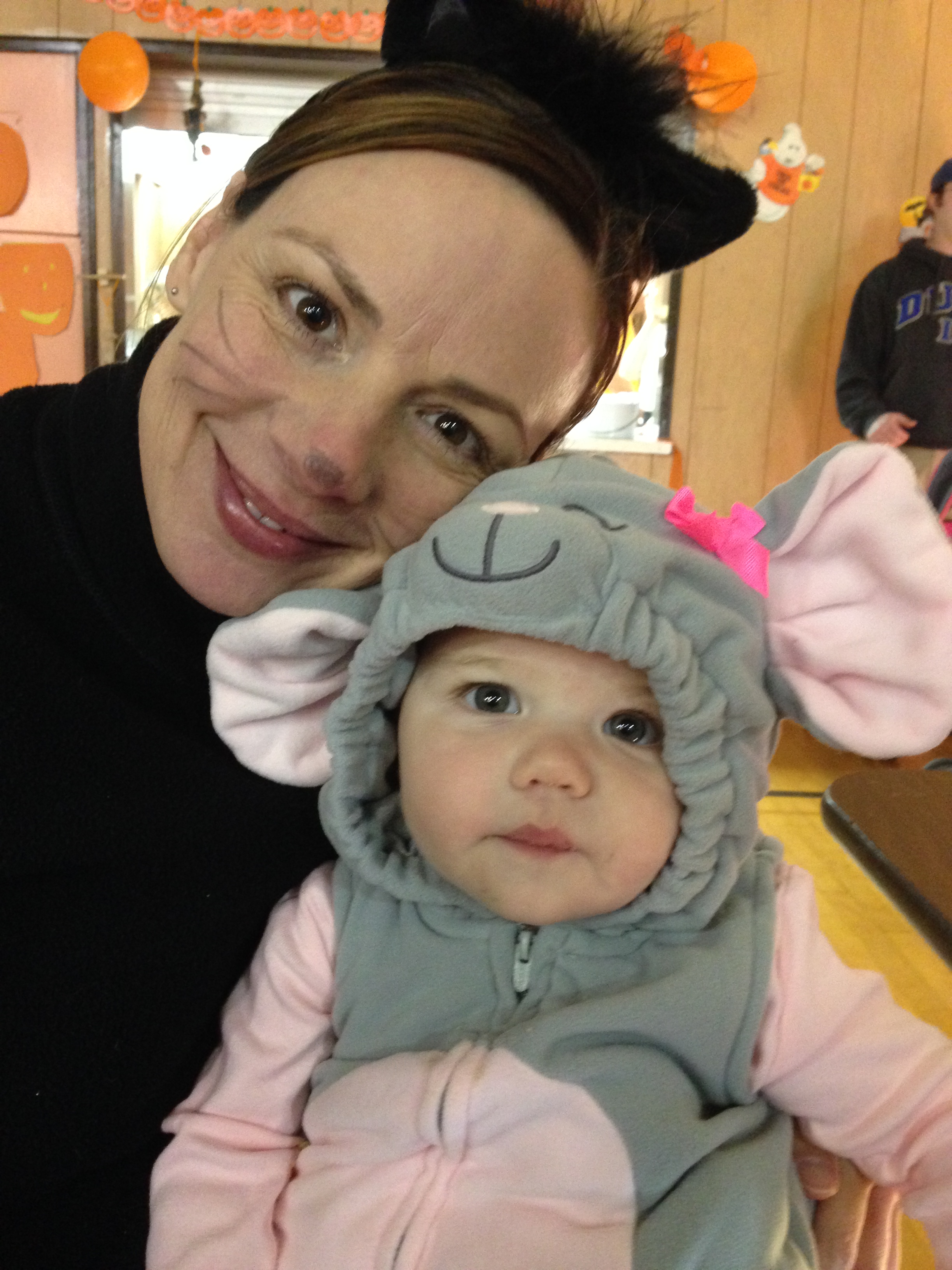
me and Estelle HalloweenI remember thinking to myself, “What are you talking about?” as I watched the radiologist point to the small white dots on the ultrasound image of my 25-week-old baby. She was saying something about cardiac rhabdo-something and her heart, and I was really just hearing words but not comprehending anything. Then, about 10 minutes later, a woman came in the room and introduced herself as a genetic counselor and handed me an information pamphlet from 1995, (and this was in 2012). I briefly glanced at it and saw the words “mental retardation” and “tumors”. I sat there dumbfounded while she told me that my unborn baby likely had a genetic disease called Tuberous Sclerosis and would have significant disabilities and may not be able to walk or talk. Again, I thought, “what are you talking about? Are you saying my baby will not be normal?”

I got into my car after the appointment and sat there in stunned silence. I picked up the pamphlet and for some reason started reading about the origins of the disease; how it was discovered and what happened to people that had tuberous sclerosis. “Fits” and “convulsions” and “retardation” were the descriptions used early on by doctors to describe these patients. Many of these poor people ended up in mental institutions. I thought, “Will my daughter have to be placed in a mental institution? How will I be able to take care of her? What will happen to her?” Then my cell phone rang. It was the genetics counselor that I had just spoken with. She told me that she was sorry and that while I could not get a late term abortion in California, that Colorado would allow medical terminations up to 27 weeks, if that was something I wanted to consider. Termination? I had been watching my daughter grow in my belly for nearly 7 months, watching her hands and feet take shape, her face and lips develop. How could I end the life of my daughter after all this time spent together? Had others terminated their babies with this diagnosis? Was that the right thing to do, if she was not going to have any quality of life and be completely mentally and physically disabled? Were the doctors certain that she had tuberous sclerosis? All of these questions were swirling around in my head as I drove the 2 hours home that day. Two weeks later, her diagnosis was confirmed through genetic testing. A spontaneous mutation had occurred during her development. This was to be our reality and I had no idea of what that would mean to my life or to hers.

In the end, I knew that I had to continue the journey with my beloved daughter growing inside of me. I became hell bent on understanding the disease and photo-178learning all that I could about what may happen to her. I threw away the 1995 pamphlet and discovered that there’s much more information and treatment options available today than there were in 1995. Our knowledge about the disease has come a long way in 20 years. (And shame on that genetic counselor that gave me such outdated information; they should be the experts on the latest information out there on genetic disorders, even the rare ones).

On the day she was born, I knew that I was going to fight for her. To be her voice and her advocate. I knew that, while I couldn’t change the fact that she has tuberous sclerosis and there is no cure, I could get her the best medical care possible and be aggressive and proactive with her treatments. I got her into a TSC clinic and I immediately enrolled her in research studies to help learn more about the disease and to help find a cure, (and selfishly, to have more doctors track her development and provide early identification of potential issues). It gave me some sense of control over an uncontrollable diagnosis and an unpredictable future. At least I could take comfort in that.

Today, my daughter is a beautiful, smiling 15 month old toddler. She isn’t yet walking or talking, but we are working on it. She may have significant developmental delays and may require special education and assistance, we just don’t know yet. She still has those cardiac rhabdomyomas, but they are not causing any issues and her eyes and kidneys are clear for now. She does have mild epilepsy, which is well controlled with medication. But these days I just try to focus on the person that she is becoming, rather than the diagnosis that she has. She is not tuberous sclerosis. She is my beautiful daughter Estelle, who laughs and hugs and smiles and just got two new teeth.

Estelle 1 year


A New Diagnosis

When I fill out medical forms that ask me for Connor’s diagnoses, I write tuberous sclerosis complex, epilepsy and developmental delay. As of Friday, I will now write autism

When Connor was first diagnosed and we read all the possibilities that could possibly come with TSC, autism terrified me the most. I really didn’t understand it. I’d worked with kids with varying degrees of autism in the classroom, some of whom I was not remotely equipped or provided the training to work with and others that were favorites of mine. But I was terrified of the word. I thought that if the day came that we received that diagnosis, I would jump out of a window.

Two years changes a lot.

I can’t say it came as a total surprise. I refer to some of Connor’s behaviors as “quirks.” I guess I was just hoping they could stay “quirks” and not become a diagnosis.

We went to Boston for his two-year visit with the TSC study. It was a low key visit since Chris and I had both caught Connor’s cold from the week before and were not particularly energetic (and why I didn’t get in touch, Ann–we’ll be back next Feb!). We also had an appointment with the Boston TSC Clinic. Even though I suspected deep down that this day was coming, I didn’t actually realize it would be Friday. The study had sent his results from the autism scale given the day before to the doctor. The words “Connor has autism” were never actually spoken. We were discussing some of his behaviors and suddenly we were talking about therapy options in addition to what he already receives. An education specialist was brought in so she could help us find local resources and I found myself saying, “So this is it? Is this an official diagnosis?” It was. But the sooner the better and we now move forward.

We also finally got a little more detail on his MRI. It wasn’t as specific as I was hoping for, but we do now know his brain has somewhere around 20-30 tubers, probably closer to 20. They are scattered throughout. I thought he had two SENs in the ventricles of the brain, but he actually has three. However, they are so small that they are nowhere near being classified as a SEGA (which can block fluid in the brain and require either surgical intervention or use of Afinitor or Rapamune) and therefore aren’t currently an issue (and hopefully never will be).

I’m sad that we only have one visit left with the Boston study. I really enjoy going up there. I think I could actually live in that city in spite of the cold and that says A LOT. I was really touched by the fact that while we were there, non-stop coverage was being given to the deaths of two firefighters and who they were. It gave the city a close knit feeling and reflected a genuine interest in the loss of two heroes. It’s not something I’ve ever seen in the 20+ years I’ve been in Atlanta, where we just get the 6 p.m. death count.

These are the only photos I took which tells you how off I was this trip.

First big boy flight with his own seat. On the way back we were told we couldn't use this seat because it wasn't airline compliant. Gotta love consistency.
First big boy flight with his own seat. On the way back we were told we couldn’t use this seat because it wasn’t airline compliant. Gotta love consistency.

photo-176

Connor loved the noisy geese.

Acceptance or Denial?

I often question how it is that I’m handling things so well these days. I was a walking ball of anxiety for the first few months after Connor was born, and now I just feel so…normal — an adapted sort of normal — but normal nonetheless. At one point I even started questioning whether I was in denial, rather than just being adjusted. It probably helps that the second year of Connor’s life has been much smoother than the first. But I’ve seen a lot of online dialogue regarding birth and diagnosis stories. Some people have developed PTSD from the traumatic circumstances. Years later the thought of those circumstances still has a traumatizing effect on them. I don’t really think about it that much. Connor’s seizures started hours after birth, leading to a five-week stay in the NICU, so it was definitely traumatizing, but why is it that I’m able to just block all that out and not think about it, while others find themselves seeking therapy or suffering at the very thought. That’s actually what led to me wondering if I was in denial. I even Googled it (haha), but I think I’m too functional to qualify (of course, I found about eight other unrelated disorders I might have).

Chris recently spent some time going through some stuff in the office. When I went to bed that night, he had placed the buttons that Northside Hospital gives out to families when a baby is born on the table next to the bed.

IMG_6366

And suddenly, I was crying. I used to be a big cryer, but I hardly ever cry anymore. So I was surprised by my reaction to the buttons. They made me sad that we didn’t get to have a normal start and it brought back the feelings of fear. I remembered asking for something to help me sleep –which they wouldn’t give me — and lying awake bitter that I could hear other people’s babies on the maternity ward crying in their parents’ rooms. I remembered how cruel I thought it was that I had to stay on the maternity ward at all. I remembered how I didn’t quite know what to do with the buttons at the time. I don’t even remember if I wore one. But I knew how excited I would have been about them had everything gone normally. I love cheesy stuff like that.

Acceptance or denial? I guess I’m somewhere in between.